
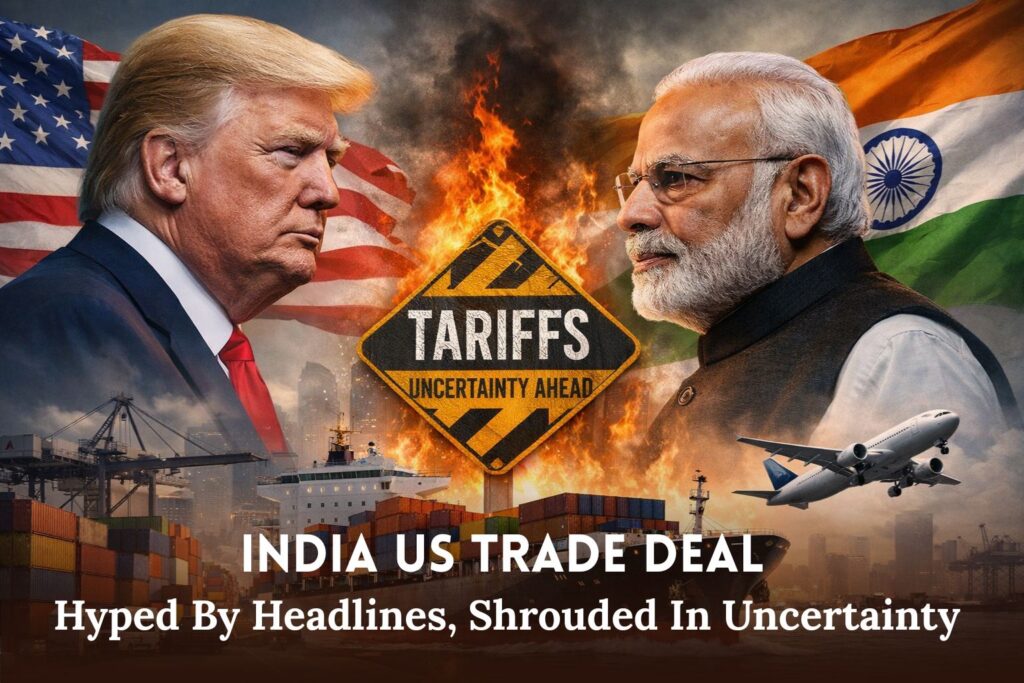
India US Trade Deal: Big Headlines, Bigger Unknowns for Trade and Supply Chains
Summary
Late on 2 February 2026 New Delhi and Washington made a headline announcement: reciprocal U.S. tariffs on many Indian exports were said to be cut to 18%, and India reportedly agreed to large U.S. procurement commitments and to reduce some Russian oil purchases. Markets reacted positively, but the announcement is political — not a final legal instrument. The article explains what was stated, what remains unclear (specific HS lines, timing, rules of origin, enforceability of procurement pledges) and why supply‑chain teams should take a posture of cautious preparedness rather than celebration.
Author note: Punchy — this isn’t a windfall memo; it’s a red flag to map exposure and move fast on scenarios.
Key Points
- Headline: White House and Indian government statements claim a tariff reduction to 18% on many Indian goods and large procurement pledges by India to buy more U.S. goods and energy.
- Major unknowns remain: which HS tariff lines are affected, whether 18% is an average/ceiling or applied selectively, and the exact legal route for implementation.
- Timing matters: immediate executive action versus phased legislative or administrative changes will drive inventory, shipping and customs decisions.
- Rules of origin and preferential treatment may require new supplier declarations or content thresholds — manufacturers must be ready to validate inputs.
- Reported procurement commitments and a shift in crude sourcing (away from Russia) could reallocate long‑haul cargo flows, tanker bookings and container demand.
- Sectors likely to benefit: textiles, gems & jewellery, some electronics and machinery — but pharmaceuticals and agriculture could face regulatory carve‑outs or SPS restrictions.
- For logistics providers the immediate impacts could include intermodal capacity reallocation, container demand shifts and short‑term fuel and tanker booking volatility.
- Actionable checklist given: audit HS exposure, review contracts, engage customs/compliance, talk to forwarders/carriers, join trade‑body briefings and scenario‑plan landed costs.
Context and relevance
This announcement sits at the intersection of geopolitics and supply‑chain planning. If implemented broadly, tariff cuts plus procurement can materially shift trade flows between India and the U.S., affecting freight volumes, chartering, fuel sourcing and landed costs. But the political headline lacks the operational detail logistics teams need. The piece is particularly relevant to exporters, importers, freight planners, customs brokers, 3PLs and procurement teams who must prepare for rapid changes and avoid costly last‑minute moves.
Practical next steps (brief)
- Audit top HS codes and run three scenarios: no change, partial inclusion, full 18% treatment.
- Review fuel/commodity contracts tied to Russian cargoes and identify contingency suppliers and demurrage risk.
- Ask trade counsel about probable rules of origin and start collecting supplier declarations now.
- Tell forwarders and carriers about potential demand shifts — early signals help secure space and better rates.
- Join export councils and chambers for pooled intelligence and to push for clear government notifications.
- Model the combined effect of tariff change, FX swings and procurement shifts on landed costs to U.S. customers.
Why should I read this?
Short, sharp: don’t pop the champagne. The headlines are big but thin — this article saves you the noise and gives the one sensible playbook: map your exposure, phone your customs lawyer, and rehearse contingency plans. If you touch India–US trade lanes, it’s time to act, not speculate.