
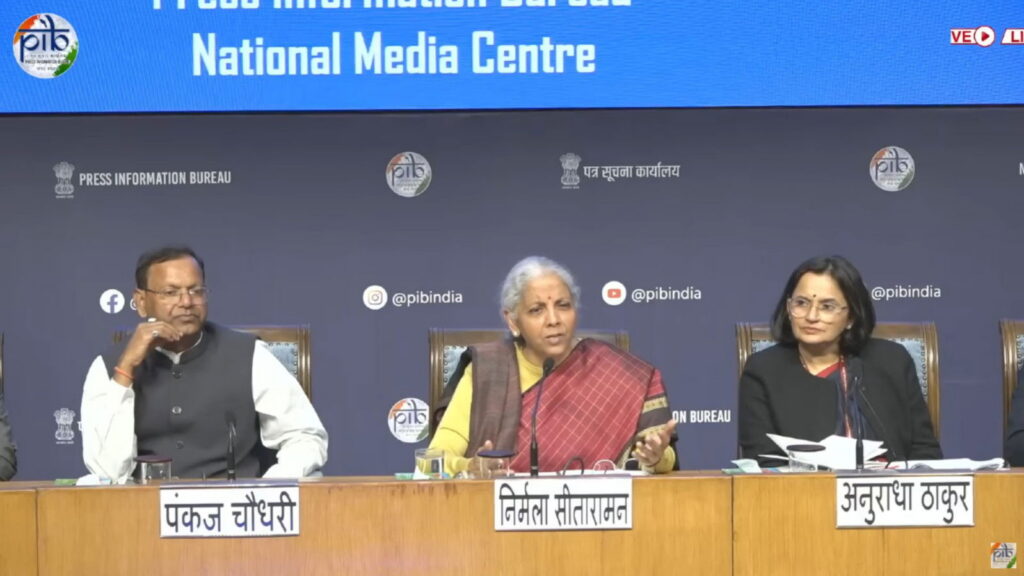
India Budget 2026-27: What HR and business leaders need to know
Summary
The Union Budget 2026-27, presented by Finance Minister Nirmala Sitharaman, sets out a roadmap to sustain economic growth by boosting domestic manufacturing, infrastructure and MSME support while investing heavily in human capital and services. Key sectoral pushes include Biopharma SHAKTI for biologics, India Semiconductor Mission 2.0, scaling of electronics and chemical manufacturing, and targeted support for textiles, AVGC and healthcare.
On the people side, the Budget prioritises skills, education and healthcare: large-scale allied health professional training, university townships, STEM facilities for girls, regional medical hubs, and programmes aimed at inclusive livelihood creation for rural women and persons with disabilities. Public capital expenditure and an SME Growth Fund are intended to drive employment and regional industrialisation.
Key Points
- Budget focus: accelerate growth and build citizen capacity through manufacturing, infrastructure and people development.
- Biopharma SHAKTI: Rs10,000 crore over five years to grow biologics and biosimilars manufacturing and research.
- India Semiconductor Mission 2.0: expanded chip production, supply-chain strengthening and skilled tech workforce development.
- SME Growth Fund: Rs10,000 crore plus liquidity and professional support to create ‘Champion MSMEs’ and strengthen micro-enterprises.
- Public capital expenditure: projected at Rs12.2 lakh crore to back infrastructure, freight corridors, inland waterways and urban initiatives.
- Human capital investments: training nearly 100,000 allied health professionals over five years and developing multiskilled caregivers.
- Education and skills: new university townships, design institutions and STEM support aimed at improving employability and exports.
- Sector support: textiles (Mega Textile Parks, integrated skills), AVGC (creative industries), tourism, heritage and sports to create local jobs.
- Inclusivity measures: programmes for rural women-led enterprises, persons with disabilities and marginalised groups to increase access to skills and livelihoods.
- Budget numbers: total expenditure ~Rs53.5 lakh crore; non-debt receipts ~Rs36.5 lakh crore; net tax receipts ~Rs28.7 lakh crore; net market borrowings ~Rs11.7 lakh crore.
Context and relevance
For HR and business leaders, this Budget is important because it aligns industrial policy with talent creation — not just hiring but building pipelines through education, vocational training and sector-specific skilling. The investment signals stronger government support for domestic manufacturing and services that will shape hiring demand across tech, healthcare, creative and manufacturing sectors.
Organisations should watch fiscal commitments to MSMEs, infrastructure projects and specialised skill programmes: these will influence regional hiring, vendor strategies and long-term workforce planning. The emphasis on multiskilled care, allied health professionals and AVGC creates clear opportunities for workforce development and partnerships with training providers.
Why should I read this
Short version: if you hire people, plan skills programmes, or run operations in India, this Budget changes the playbook. It funnels cash into areas that will drive hiring and retraining needs — from chips to biopharma to care workers — so skim the highlights now and dig into the bits that affect your talent pipeline later. We’ve done the heavy lifting so you can spot what matters fast.