
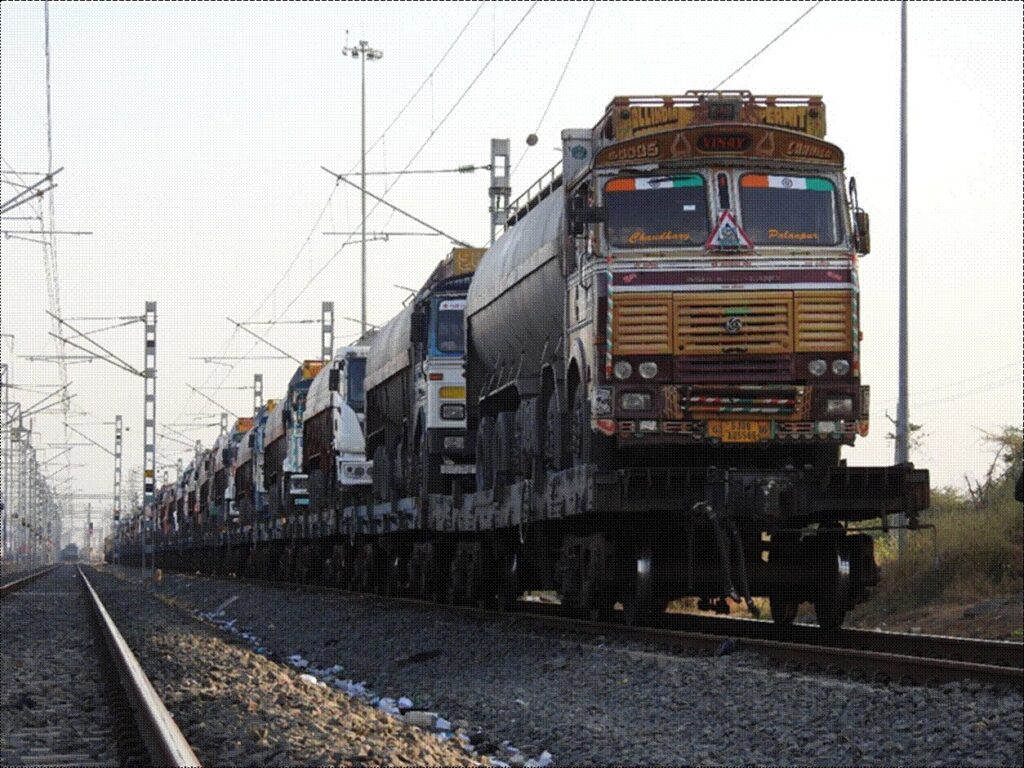
How Indian Railways’ Trucks-on-Trains Is Transforming Freight Logistics
Summary
Indian Railways has rolled out a Trucks-on-Trains (ToT) service on Dedicated Freight Corridors (DFC) that carries loaded trucks on modified flat wagons for the long-haul leg, with trucks handling only first- and last-mile movements. The pilot corridor between New Rewari and New Palanpur (≈636 km) has cut transit time roughly from 30 hours by road to about 12 hours by ToT. Pricing is transparent by weight slab and milk tankers enjoy GST benefits, helping dairy and perishable cargo. The initiative has moved from pilot to a commercial product with rising volumes, and is positioned as a core element of the DFC’s multimodal logistics strategy.
Key Points
- Trucks-on-Trains (ToT) transports loaded trucks on specially modified flat wagons across electrified DFCs, leaving only first/last-mile to road.
- Current operation: New Rewari – New Palanpur (Western DFC), ~636 km; transit time cut from ~30 hrs (road) to ~12 hrs (ToT).
- Transparent pricing by weight slab: ₹25,543 (up to 25t), ₹29,191 (25–45t), ₹32,000 (45–58t); empty truck rate ₹21,894; milk tankers exempt from GST.
- FY2025 (Apr–Dec) performance: 545 rakes, >300,000 tonnes moved, revenue ₹36.95 crore; cumulative since launch: >1,955 trips, >1 million tonnes, >₹131 crore revenue.
- Major customers include GCMMF (Amul) and large LSPs — dairy, FMCG and food processors are key demand drivers.
- Environmental and energy gains: on Palanpur–Rewari stretch nearly 48,875 trucks removed from highways; estimated diesel savings ~88.8 lakh litres and ~2.31 lakh tonnes CO₂ avoided.
- Operational benefits: fewer highway tolls, reduced congestion, lower driver fatigue and accidents, better resilience against weather-related disruptions, and higher schedule reliability via controlled DFC operations.
- Scalability plans: new Flat Multipurpose (FMP) wagon designs, more origin–destination terminals and integration with multimodal terminals and logistics parks.
Context and Relevance
India’s freight growth is straining highways and urban air quality. The ToT model leverages the DFC’s electrified corridors to shift long-haul volumes from road to rail, aligning commercial efficiency with sustainability targets. Faster, predictable transit times and clear pricing make rail attractive for time-sensitive and perishable cargo — a notable change for sectors such as dairy, agriculture and FMCG. The initiative also supports national goals to reduce fuel consumption, emissions and highway wear, and it dovetails with broader multimodal logistics planning (MLPs and terminals) to optimise mode choice across networks.
Why should I read this?
Because this isn’t just another rail story — it’s the bit that actually shifts hundreds of trucks off the road, slashes transit times and saves diesel. If you move, ship or buy perishables (think dairy, onions, fresh fruit) or run logistics at scale, ToT changes cost, speed and carbon math. Short version: it could make your supply chain cheaper, cleaner and more reliable — so yes, give it five minutes.
Author style
Punchy. The piece underlines that ToT isn’t an experiment any more — it’s a commercial product delivering measurable volume, revenue and clear environmental wins. Read the detail if this affects your routing, pricing or sustainability planning.