
Executive Summary
The second quarter of 2026 produced the most concentrated sequence of responsible gambling policy change since the UK White Paper was published in 2023. Across the UK alone, four simultaneous regulatory changes took effect on 1 April, mandatory affordability check rollout began, a judicial review threat was formalised in May, a deposit limit deadline was extended in the same month, and a technical standards milestone landed on 30 June. That is not a reform agenda progressing in orderly sequence. It is a sector at the limit of its implementation capacity while the legal ground beneath it shifts.
The UK story was not isolated. The Netherlands confirmed a near-total gambling advertising ban with bonus elimination and an age-21 threshold for high-risk online gambling, effective Q1 2027, after three years of post-legalisation data made its partial regime politically untenable. Australia published a five-year AU$112.7 million harm reduction funding commitment while its own regulatory impact assessment found the advertising measures would cut industry spend by 0.8 percent. Ontario launched BetGuard covering all 82 licensed operators simultaneously. Sweden’s credit gambling prohibition entered its audit phase. Two US federal bills targeting advertising harm and responsible gambling support reached congressional calendars.
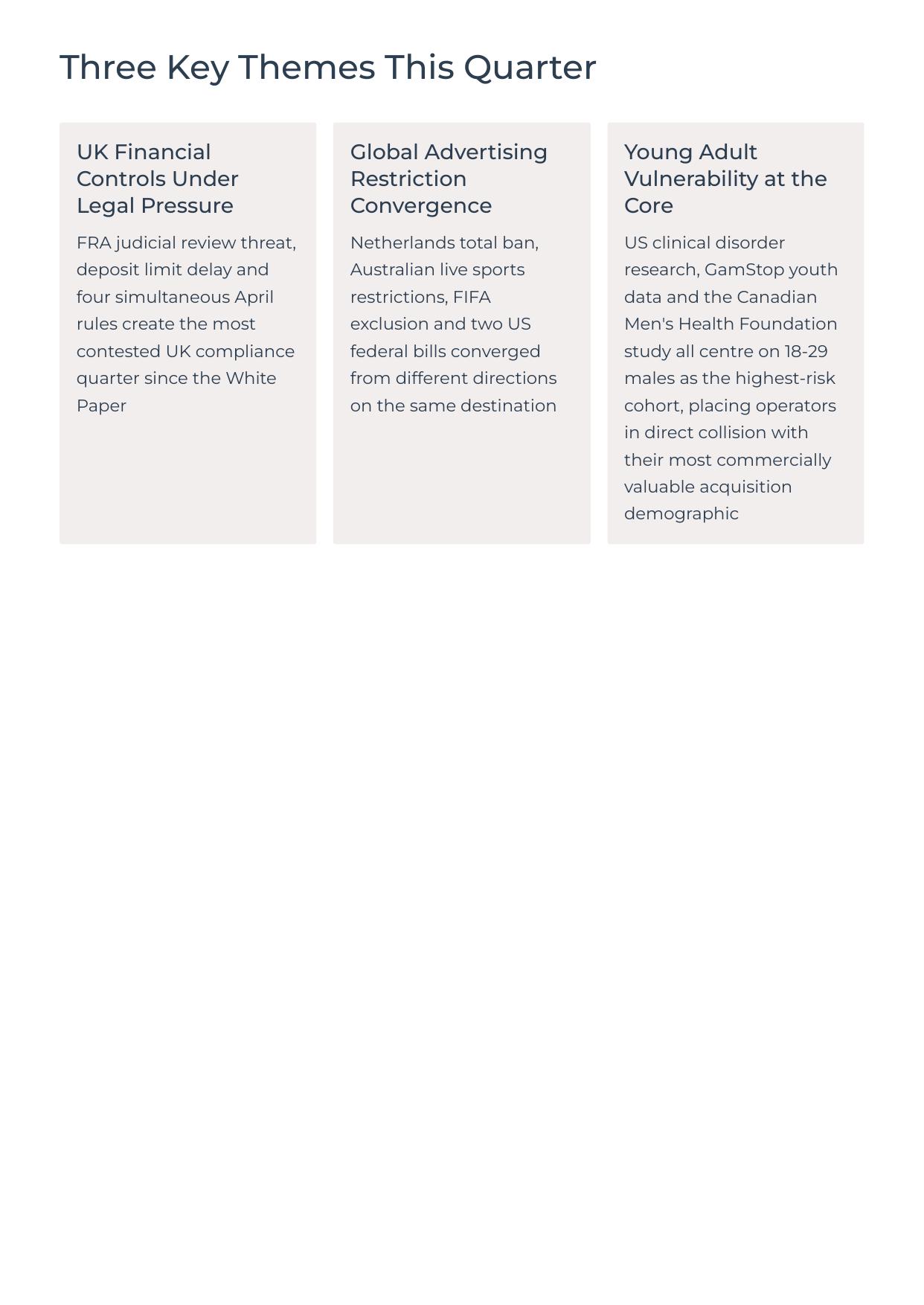
Three developments define what Q2 2026 will mean in retrospect: the collision between the UKGC’s affordability framework and an organised legal challenge at the moment operators must make large implementation decisions; the convergence of advertising restriction policies across unrelated jurisdictions through different mechanisms, suggesting the political and evidential conditions have matured globally at once; and the emergence, across multiple independent research outputs, of a clear high-risk demographic profile that places the 18-29 male sports bettor at the intersection of the sector’s commercial logic and its harm obligation.
Three Key Themes This Quarter