
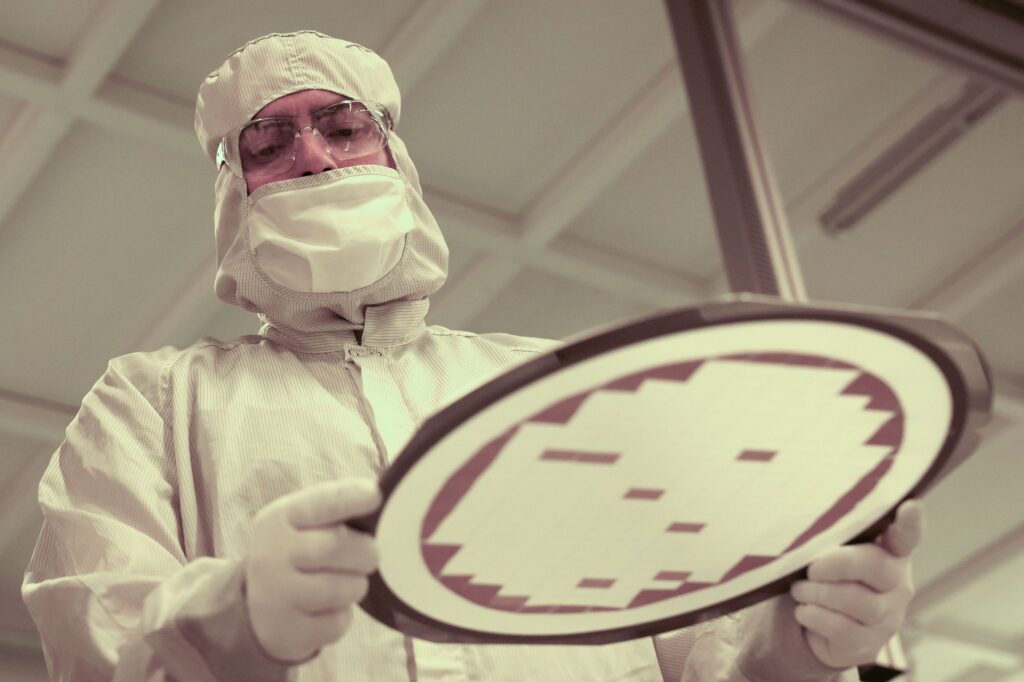
The Ridiculously Nerdy Intel Bet That Could Rake in Billions
Summary
Intel has quietly doubled down on advanced chip packaging — the process of combining multiple chiplets and memory into a single, custom package — and is positioning that capability as a major revenue and strategic play in the AI era. The company restarted and upgraded fabs in Rio Rancho, New Mexico (notably Fab 9), and is rolling out new technologies such as EMIB-T alongside earlier innovations like EMIB and Foveros. Intel’s Foundry arm is pitching packaging as a flexible service for customers who want to mix-and-match wafer production and back-end integration, and executives say packaging revenue could reach well north of $1 billion and eventually run into multi‑billion-dollar deals.
The plan hinges on landing large external customers (reports name Google and Amazon as targets) and scaling assembly/test capacity — including expansions in Penang, Malaysia. But packaging is operationally hard: customers are cautious, fab capacity and supply-chain dynamics matter, and local environmental concerns (water use, emissions) complicate expansion. Intel says EMIB-T ramps this year and that meaningful validation will show up in increased capital expenditure as customer contracts are signed.
Key Points
- Advanced chip packaging (stacking, interconnect bridges) is becoming central to meeting AI compute needs.
- Intel is investing heavily in packaging capacity at Rio Rancho and expanding in Penang, signalling a strategic push within its Foundry business.
- New processes like EMIB-T aim to improve power efficiency and signal integrity versus competitors’ approaches.
- Intel projects packaging revenue growth — CFO expects packaging to hit well over $1 billion and executives hint at multi‑billion‑dollar annual deals.
- Potential customers include large cloud players that design custom chips but outsource parts of fabrication and packaging.
- Challenges remain: scaling assembly/test throughput, convincing customers to commit, and managing local environmental impacts.
- A key market signal will be a clear increase in Intel Foundry capital expenditure once customer contracts are secured.
Context and relevance
This story matters because as AI demand explodes, raw wafer production is no longer the only bottleneck — how chips are packaged (how memory, accelerators and interconnects are combined) can determine performance, power and cost. If Intel converts packaging prowess into external-foundry revenue, it could reshape competitive dynamics with TSMC and other suppliers and capture a lucrative slice of the AI supply chain. For investors, engineers and cloud operators, packaging is a technical detail with huge commercial consequences.
Why should I read this?
Look — if you care who makes the chips that run the next wave of AI models (and who pockets the big margins), this is the bit you need to know. Intel’s not just tinkering under the bonnet: it’s placing a big, nerdy wager that packaging — not just wafers — will drive the next round of cash and capability. Short version: it’s where the money and performance wins might be hiding. We read it so you don’t have to.
Author style
Punchy: this is a strategic, highly technical play that could pay off in billions. If Intel lands major cloud customers and scales production, it won’t just be clever engineering — it’ll be a commercial game changer. Read the detail if you want to understand who could dominate AI hardware beyond the usual wafer wars.
Source
Source: https://www.wired.com/story/why-chip-packaging-could-decide-the-next-phase-of-the-ai-boom/