
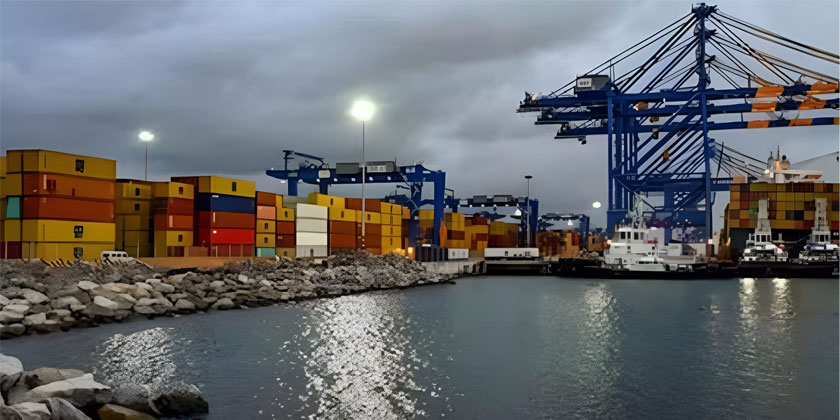
Sonowal Launches ₹1,500 Crore Green and Infra Push at VOC Port
Summary
Union Minister Sarbananda Sonowal inaugurated and laid foundation stones for port projects totalling around ₹1,500 crore at V.O. Chidambaranar (VOC) Port, Tamil Nadu. Completed works worth ₹160 crore improve cargo handling and sustainability — upgraded rail and road evacuation, enhanced power systems that integrate solar, wind and battery storage, new safety infrastructure, digital platforms including a digital twin, and the VOC Maritime Heritage Museum.
Foundation stones were laid for projects worth about ₹1,340 crore: an 8 MW wind farm with 5 MW storage, a 2 MW green hydrogen facility, a 2 MW ground-mounted solar plant, smart energy management systems, ₹131 crore rail infrastructure, ₹250 crore in shipbuilding equipment, and ₹367 crore for green tugs. The investments are aimed at cutting vessel turnaround, lowering logistics costs and strengthening VOC Port as a regional transshipment and industrial hub.
Key Points
- Total programme: over ₹1,500 crore in completed works and new projects at VOC Port.
- Completed ₹160 crore works: better rail/road evacuation, upgraded power (solar, wind, battery), safety enhancements, digital twin platform, maritime museum.
- New projects (~₹1,340 crore): 8 MW wind + 5 MW storage, 2 MW green hydrogen, 2 MW solar, smart energy management.
- Major infrastructure spends: ₹131 crore rail upgrade, ₹250 crore shipbuilding equipment, ₹367 crore on green tugs.
- Objectives: reduce vessel turnaround, cut logistics costs, boost shipbuilding, renewables and tourism, and spur regional industrial growth (Thoothukudi, Tirunelveli, Madurai).
- Strategic fit: aligns with the government’s maritime roadmap and port-led industrialisation push.
Context and relevance
This package is significant for the Indian maritime and logistics sector for three reasons: it pairs decarbonisation with capacity upgrades; it signals central government backing for port-led regional industrial growth; and it combines hard infrastructure (rail, shipbuilding, tugs) with digital and energy-smart investments (digital twin, renewables, hydrogen). For carriers and shippers, reduced turnaround times and improved rail/road evacuation mean lower dwell times and operating costs. For regional planners, the investment strengthens the port’s transshipment credentials and supports downstream industries.
Why should I read this?
Because it’s not just another ribbon-cutting. Big money, green tech and rail links — all aimed at making the port faster and cheaper to use. If you work in shipping, logistics, regional planning or energy, this short read tells you where VOC Port is heading and why it matters for trade corridors in south Tamil Nadu.
Author style
Punchy: This is a strategic, high-value move. It combines rapid operational fixes with long-term green bets — green hydrogen, wind, battery storage and digital twin tech. If you care about competitiveness or sustainability in maritime logistics, check the detail: the components—especially shipbuilding equipment and green tugs—change the local industrial picture.