
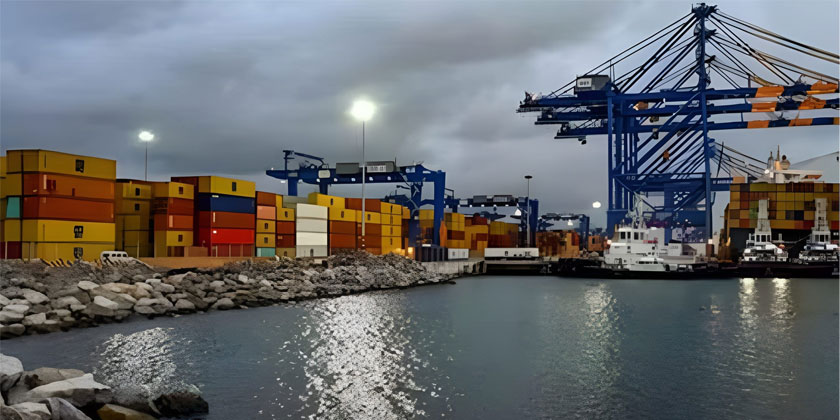
Sonowal Launches ₹1,500 Crore Green and Infra Push at VOC Port
Summary
Union Minister Sarbananda Sonowal inaugurated and laid foundation stones for projects totalling over ₹1,500 crore at V.O. Chidambaranar (VOC) Port, Tamil Nadu. The work blends completed sustainability and efficiency upgrades (₹160 crore) with new investments (₹1,340 crore) in renewables, green hydrogen, rail, shipbuilding and low-emission tugs to speed up vessel turnaround and lower logistics costs.
Key Points
- Over ₹1,500 crore in combined projects announced and launched at VOC Port.
- Completed works (₹160 crore) include improved rail/road evacuation, upgraded power with solar, wind and battery storage, enhanced safety systems, digital platforms (digital twin) and a maritime heritage museum.
- Foundation stones for ₹1,340 crore of projects: 8 MW wind farm with 5 MW storage, 2 MW green hydrogen plant, 2 MW ground-mounted solar, smart energy management, and digital upgrades.
- Major investments also cover ₹131 crore for rail infrastructure, ₹250 crore in shipbuilding equipment and ₹367 crore for green tugs to reduce turnaround time and logistics costs.
- The expansion is aimed at strengthening VOC Port as a regional transshipment and industrial hub for Thoothukudi, Tirunelveli and Madurai, aligning with the national maritime roadmap and port-led industrialisation.
Content summary
Sarbananda Sonowal officially opened completed upgrades and began construction works focused on both environmental sustainability and cargo-handling efficiency. Completed upgrades worth about ₹160 crore targeted connectivity (rail and road), hybrid power systems combining solar, wind and battery storage, safety infrastructure and digital platforms such as a digital twin for better port operations. A maritime heritage museum was also launched.
Foundation projects totalling roughly ₹1,340 crore include an 8 MW wind farm paired with 5 MW of storage, a 2 MW green hydrogen plant, a 2 MW solar farm, smart energy management systems, substantial rail works, investments in shipbuilding equipment and a fleet of green tugs. The combined objective is to cut vessel turnaround time, lower logistics costs and catalyse regional industrial growth.
Context and relevance
This is a strategically timed push: ports worldwide are decarbonising and improving throughput to stay competitive, and VOC’s investments mirror that shift. The package mixes energy transition measures (wind, solar, batteries and green hydrogen) with hard logistics upgrades (rail, shipbuilding gear, tugs and digitalisation). For exporters, importers and logistics planners, reduced turnaround and better hinterland connectivity can translate into lower freight costs and faster lead times. For policymakers and investors, it signals continued government emphasis on port-led industrialisation and green maritime infrastructure.
Why should I read this
Quick and dirty: if you move freight, build ships, invest in ports or follow regional industrial growth, this matters. VOC’s ₹1,500 crore package will change how fast ships load and leave, how much energy the port uses (and how clean it is), and where supply chain investment flows in southern Tamil Nadu. Skip this and you might miss the next shift in regional shipping costs and hub dynamics.
Author style
Punchy: big-money, practical upgrades that actually cut costs and emissions — not buzzwords. If you care about maritime competitiveness or green infrastructure, the details here are worth a closer read.