
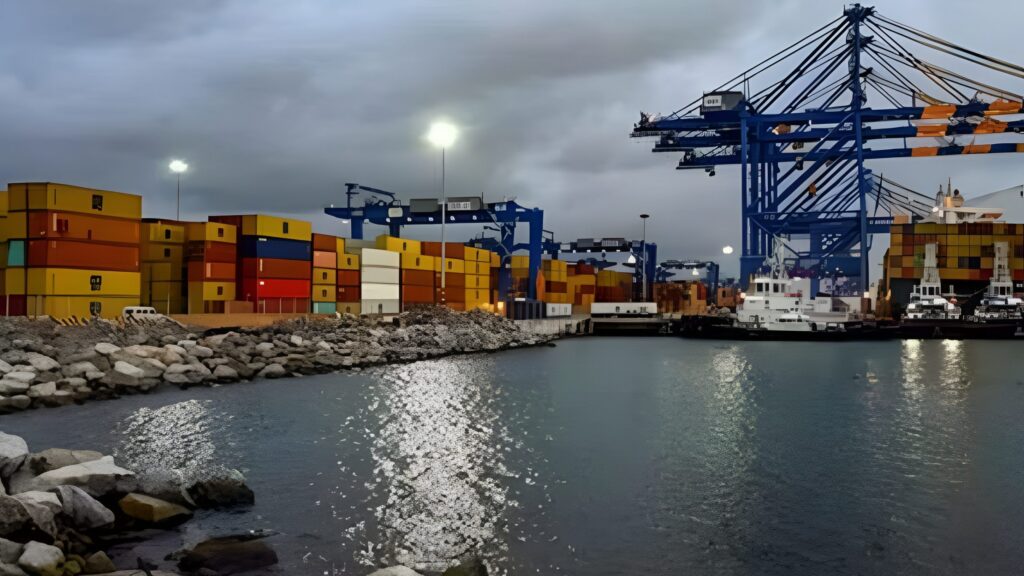
Kerala Signs ₹2,000 Crore PSU-Led Logistics Master Plan for Vizhinjam Port
Summary
The Kerala government has signed memoranda of understanding with three central public sector undertakings to execute a ₹2,000 crore logistics master plan for Vizhinjam International Seaport. The pacts — signed at the Legislative Assembly Complex in the presence of Chief Minister Pinarayi Vijayan — bring Indian Oil Corporation (IOC), Container Corporation of India (CONCOR) and Central Warehousing Corporation (CWC) together with state-run Vizhinjam International Seaport Limited (VISL).
The package splits the investment across three core areas: IOC (about ₹700 crore) for large-scale bunkering to service mother vessels; CONCOR (about ₹600 crore) for rail-linked logistics including inland container depots and container freight stations to improve evacuation and hinterland connectivity; and CWC (about ₹700 crore) to build a nearly 50-acre multimodal logistics park with cold storage and export-oriented units. The state says these projects will not burden the state exchequer.
Key Points
- Total planned investment: ₹2,000 crore, via MOUs between VISL and three central PSUs.
- Indian Oil Corporation (~₹700 crore) to develop large-scale bunkering facilities for mother vessels — aiming to make Vizhinjam an energy refuelling hub in the Indian Ocean region.
- Container Corporation of India (~₹600 crore) to invest in rail-linked logistics: inland container depots and container freight stations to speed cargo evacuation and improve hinterland connectivity.
- Central Warehousing Corporation (~₹700 crore) to develop a ~50-acre multimodal logistics park including cold storage and export-focused units; state claims no financial burden on its coffers.
- Objective: avoid cargo concentration, preserve competitive pricing for trade stakeholders, and retain critical maritime infrastructure under public-sector oversight despite the port operating under a PPP model.
Context and Relevance
Vizhinjam is positioned on India’s south-western coast as a deep-water port with strategic potential for transhipment and regional connectivity. These PSU-led investments target three persistent logistics pain points: fuel bunkering for large vessels, rail connectivity for faster cargo movement inland, and warehousing/cold-chain capacity for exports and perishables.
For the logistics and maritime sectors this matters because the plan can reshape container and bunker flows in the region, reduce dependence on single private operators, and strengthen India’s maritime infrastructure footprint in the Indian Ocean. The combination of bunkering plus multimodal rail and warehousing capability makes Vizhinjam more attractive to carrier networks and exporters — with knock-on effects for regional supply chains, port competition and export logistics costs.
Why should I read this?
Quick and dirty: if you work in shipping, freight, warehousing or port planning — this will affect where cargo moves, where vessels refuel and who controls key logistics services in Kerala. We’ve skimmed the detail and pulled out the money, the players and what it means for flows and costs. Save the time — read this instead of scrolling through the full release.
Author style
Punchy: big-ticket PSUs signing up to build bunkering, rail-connected logistics and a multimodal park — that’s the sort of coordinated move that changes trade routes and creates new commercial opportunities. If you follow ports or supply-chain investment, this isn’t just news — it’s a signpost of where the market could shift next.