
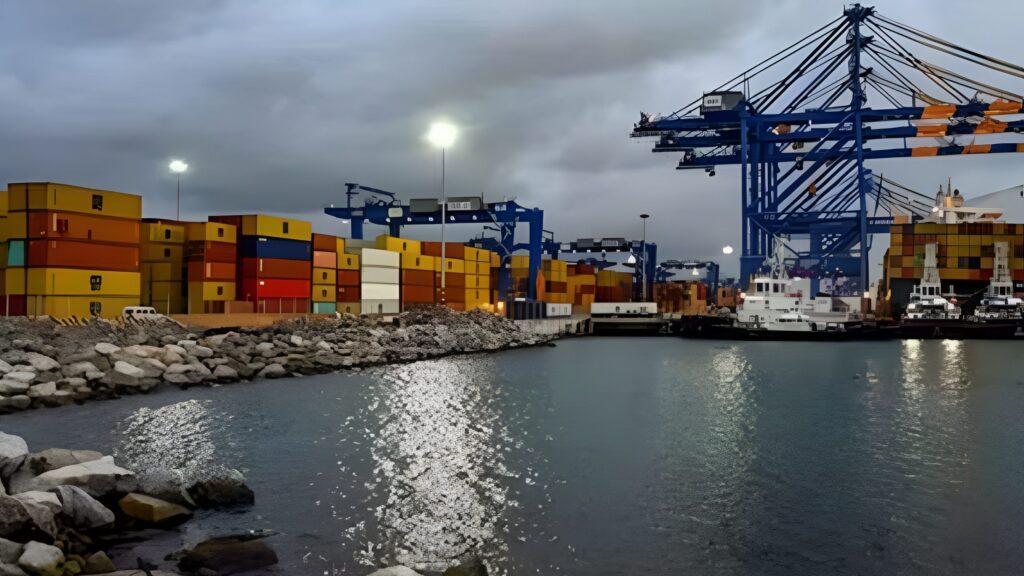
Kerala Signs ₹2,000 Crore PSU-Led Logistics Master Plan for Vizhinjam Port
Summary
The Kerala government has signed memoranda of understanding with three central public sector undertakings and Vizhinjam International Seaport Limited (VISL) to roll out a ₹2,000 crore logistics master plan for Vizhinjam Port. The agreements, finalised at the Legislative Assembly in the presence of Chief Minister Pinarayi Vijayan, bring Indian Oil Corporation (IOC), Container Corporation of India (CONCOR) and Central Warehousing Corporation (CWC) into the expansion framework.
The investment is split across three focus areas: IOC will establish large-scale bunkering facilities (≈₹700 crore); CONCOR will develop rail-linked logistics — including inland container depots and container freight stations (≈₹600 crore); and CWC will build a roughly 50-acre multimodal logistics park with cold storage and export-oriented units (≈₹700 crore). The state says the projects will not burden the state exchequer and aim to keep critical infrastructure under public-sector oversight despite the port’s PPP model.
Key Points
- Kerala signed MoUs with IOC, CONCOR and CWC alongside VISL to implement a ₹2,000 crore logistics master plan for Vizhinjam Port.
- IOC to invest around ₹700 crore for bunkering facilities to service mother vessels, positioning Vizhinjam as an energy refuelling hub in the Indian Ocean region.
- CONCOR to invest about ₹600 crore in rail-linked logistics infrastructure (ICDs, CFS) to improve cargo evacuation and hinterland connectivity.
- CWC will invest roughly ₹700 crore to develop a ~50-acre multimodal logistics park including cold storage and export units; state says no financial burden on the exchequer.
- Plan aims to avoid cargo concentration, ensure competitive pricing for trade stakeholders and protect national maritime interests while expanding Vizhinjam’s economic role.
Content summary
The ceremony at the Legislative Assembly Complex included Chief Minister Pinarayi Vijayan, Ports Minister V N Vasavan, Ports Secretary Dr A Kowsigan IAS and VISL MD Dr Divya S Iyer IAS, plus senior PSU officials. The master plan integrates PSU capabilities into the port’s expansion to retain public oversight of key functions even as the port operates under a public–private partnership.
The bunkering facility will enable refuelling of large mother vessels, strengthening Vizhinjam’s strategic maritime role. CONCOR’s rail-linked projects target faster and more reliable cargo evacuation to the hinterland, addressing a common bottleneck for new deep‑water ports. The multimodal logistics park by CWC will offer warehousing, cold chain and export-focused units to support trade and perishables logistics. Collectively, these investments are pitched as boosting regional connectivity, competitiveness and national maritime security without state budgetary strain.
Context and relevance
This development matters to shipping lines, freight forwarders, exporters and logistics investors. Vizhinjam’s deep-water advantage has long been touted; the new PSU-led investments close gaps in bunkering, hinterland rail links and warehousing — three elements that determine whether a port becomes a transshipment or origin/destination hub.
It also signals a strategic approach: using central PSUs to spread critical functions across public entities can reduce monopolistic concentration, help keep prices competitive and protect national interests. The move aligns with broader trends in India towards multi‑modal logistics integration, strengthening port-hinterland links and building dedicated cold-chain capacity for exports of perishables.
Why should I read this
Short version: big money, big players, and a real shot at making Vizhinjam more than just another port. If you work in shipping, rail logistics, cold-chain, or export markets — this could change routing, costs and investment opportunities. It’s the kind of local move with national ripples, so worth a quick read if logistics touches your business.