
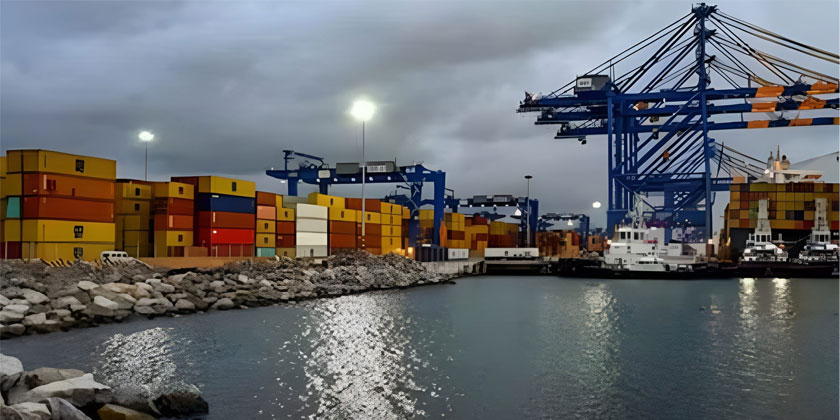
Sonowal Launches ₹1,500 Crore Green and Infra Push at VOC Port
Summary
Union Minister Sarbananda Sonowal inaugurated and laid foundation stones for projects totalling over ₹1,500 crore at V.O. Chidambaranar (VOC) Port, Tamil Nadu. Completed works worth around ₹160 crore target cargo efficiency and sustainability — stronger rail and road evacuation links, upgraded power systems that integrate solar, wind and battery storage, safety upgrades, new digital platforms (including digital twin technology) and the VOC Maritime Heritage Museum.
Foundation projects valued at about ₹1,340 crore include an 8 MW wind farm with 5 MW storage, a 2 MW green hydrogen facility, a 2 MW ground-mounted solar plant, smart energy management systems, ₹131 crore for rail infrastructure, ₹250 crore for shipbuilding equipment and ₹367 crore for green tugs. The package is aimed at cutting vessel turnaround times, lowering logistics costs and strengthening VOC Port as a regional transshipment and industrial hub for Thoothukudi, Tirunelveli and Madurai.
Key Points
- Central government-backed interventions at VOC Port exceed ₹1,500 crore in combined completed and planned works.
- Completed ₹160 crore works focus on connectivity, hybrid power upgrades (solar, wind, batteries), safety and digital enhancements including digital twin tech.
- Foundation stones for ~₹1,340 crore include an 8 MW wind farm + 5 MW storage, 2 MW green hydrogen facility and 2 MW ground-mounted solar installation.
- Significant spend on logistics and industry: ₹131 crore (rail), ₹250 crore (shipbuilding equipment) and ₹367 crore (green tugs).
- Expected operational benefits: reduced vessel turnaround, lower logistics costs and faster cargo evacuation via improved road/rail links.
- Regional economic impact: strengthens VOC as a transshipment hub and supports industrial growth across Thoothukudi, Tirunelveli and Madurai.
- Policy alignment: the investments dovetail with the government’s maritime roadmap and a push for port-led industrialisation and green innovation.
Context and relevance
The package is part of a broader trend where Indian ports are investing in decarbonisation, digitalisation and hinterland connectivity to stay competitive. Renewable generation (wind + solar), battery storage and green hydrogen at a port level are notable: they reduce operating costs, increase energy resilience and prepare terminals for the demands of cleaner shipping and shore-power use. Heavy investment in rail links, shipbuilding gear and green tugs signals a strategic move to capture more value-added maritime activity (repairs, shipbuilding, transshipment) rather than just handling cargo.
For logistics, shipping and regional planners this matters because improved turnaround and multimodal links directly lower supply‑chain cost and time — making nearby industrial clusters more attractive for investment.
Why should I read this?
Quick and dirty: big money, real projects, and green tech at a working port. If you move cargo, plan logistics, or watch regional industrial development, this isn’t fluff — it changes how quickly ships load/unload, how power is supplied, and where value gets created locally. It’s a compact update that tells you the port’s going greener and faster — saved you the skim, have a read.