
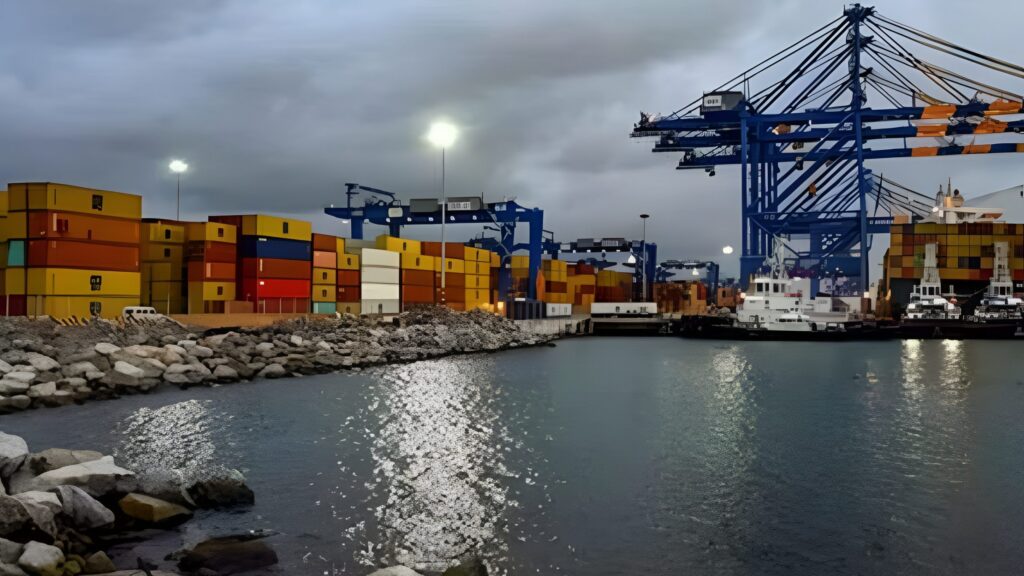
Kerala Signs ₹2,000 Crore PSU-Led Logistics Master Plan for Vizhinjam Port
Summary
The Kerala government has signed memoranda of understanding with three central public sector undertakings to roll out a ₹2,000 crore logistics master plan for Vizhinjam International Seaport. The agreements — finalised at the Legislative Assembly Complex in the presence of Chief Minister Pinarayi Vijayan — bring Indian Oil Corporation Limited (IOCL), Container Corporation of India (CONCOR) and Central Warehousing Corporation (CWC) together with state-run Vizhinjam International Seaport Limited (VISL). The investment is split across bunkering, rail-linked logistics and a multimodal logistics park, while the state says the scheme will not burden the state exchequer.
The move aims to broaden Vizhinjam’s role from a port facility operated under a PPP model to a wider economic and logistics hub, keeping strategic infrastructure under public-sector oversight to avoid cargo concentration and protect national maritime interests.
Key Points
- Total investment: ₹2,000 crore master plan for Vizhinjam International Seaport.
- Indian Oil Corporation: ~₹700 crore for large-scale bunkering to service mother vessels, positioning Vizhinjam as a regional refuelling centre.
- Container Corporation of India (CONCOR): ~₹600 crore to build rail-linked logistics — inland container depots and container freight stations to boost evacuation and hinterland connectivity.
- Central Warehousing Corporation (CWC): ~₹700 crore to develop a nearly 50-acre multimodal logistics park with cold storage and export-oriented units; project claimed to be off-budget for the state.
- Objective: prevent cargo concentration, ensure competitive pricing for trade stakeholders and safeguard national maritime interests while expanding the port’s economic footprint.
Context and Relevance
Vizhinjam occupies a strategic location on India’s south-west coast with potential to serve transhipment and energy-refuelling needs in the Indian Ocean. The package — combining bunkering, multimodal cargo handling and rail connectivity — addresses several long-standing constraints: limited local evacuation routes, inadequate cold-chain and logistics support for exports, and reliance on a narrow set of operators. A PSU-led plan signals government intent to retain strategic control even as private operators run core port operations under PPP. For industry stakeholders this could mean improved service options, potentially lower handling costs and new opportunities for exporters, cold-chain operators and rail-linked logistics providers.
Author style
Punchy: This is a clear, co-ordinated public-sector push to turn Vizhinjam into more than a berth — think bunkering hub + rail links + cold-chain park. If you work in ports, shipping, rail freight or export logistics, the details here are immediately relevant to capacity planning and route strategy.
Why should I read this?
Quick heads-up: big PSUs are ploughing serious money into Vizhinjam. If you deal with ocean carriers, bunker suppliers, cold-chain or container logistics — this could change routing, costs and capacity in south India. Skip it only if ports don’t touch your business.