
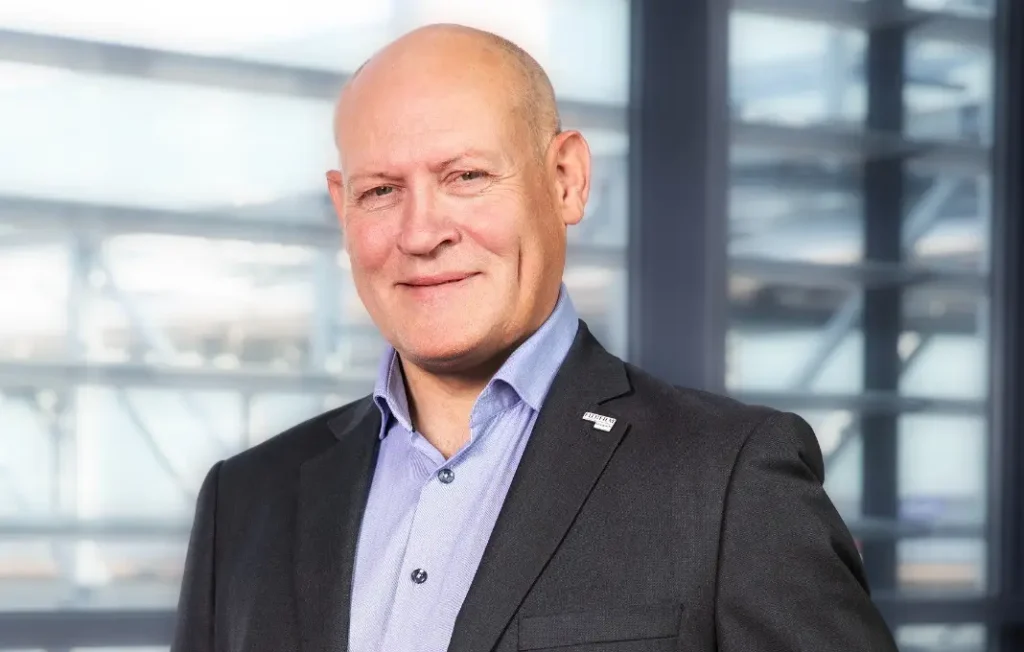
From Photo Film Maker To Biopharma Giant
Summary
Fujifilm, once best known for photo film, has transformed into a major biopharmaceutical contract manufacturer. CEO Lars Petersen explains the company's pivot since 2011, backed by more than $8bn of investment through acquisitions and facility builds. Fujifilm opened a large end-to-end cell-culture facility in Holly Springs, North Carolina, with an initial 8×20,000L bioreactor setup (phase I) and plans to double capacity in phase II. When fully operational in 2028 the site could produce roughly 50 million doses per year. The company uses a standardised, modular ‘kojoX’ approach to design and replicate facilities quickly and efficiently, cutting design time dramatically and supporting biologics production for cancers, infectious and neurological diseases.
Key Points
- Fujifilm repurposed core manufacturing and tech skills to enter biopharma after film demand declined.
- Since 2011 the company has invested over $8bn in biopharma via strategic M&A and expansions.
- Holly Springs (NC) is an end-to-end cell-culture site: phase I = 8×20,000L bioreactors; phase II will add another 8, reaching ~50m doses/year by 2028.
- The kojoX modular facility model standardises equipment and processes, enabling faster, repeatable builds (design time cut by over 70% at Holly Springs).
- Fujifilm focuses on biologics and drug-delivery innovations for hard-to-cure cancers, infectious and neurological diseases, with customers including Johnson & Johnson, Regeneron and argenx.
- Phase I capacity is already sold out, indicating strong market demand; no additional US expansions announced yet.
Content Summary
In conversation with Chief Executive, Lars Petersen outlines how Fujifilm shifted from a 90-year-old photo-film business into a biopharma manufacturing leader by redeploying manufacturing expertise and investing heavily in capacity and technology. The Holly Springs campus demonstrates the company's strategy: large-scale, modular plants built to the same specification across regions to speed delivery and scale production for partner biopharma companies. The approach targets supply gaps for critical biologic medicines and prioritises speed, standardisation and proximity to clients.
The article highlights concrete metrics (investment totals, reactor counts, dose estimates) and customer interest, signalling both Fujifilm's commitment and the wider industry appetite for onshore, contract manufacturing capacity.
Context and Relevance
This piece matters for leaders in manufacturing, life sciences and supply-chain strategy. It underscores two major trends: the industrial pivot of legacy manufacturing firms into high-value biotech, and the rise of modular, repeatable facility design to accelerate capacity deployment. For CEOs weighing onshoring, supply resilience or CDMO partnerships, Fujifilm's model is a live case study of scale, capital deployment and operational standardisation in biopharma.
Why should I read this?
Quick and useful — if you want to know how a camera-film giant rewired itself into a biotech powerhouse, this breaks down the strategy, the money and the modular trick that speeds buildouts. Good intel if you're thinking supply-chain resilience, CDMO deals or big-capex manufacturing plays.
Author
Punchy: Katie Kuehner-Hebert distils the tech-to-biotech pivot with clear numbers and practical detail — worth a skim or a deeper read if you care about manufacturing scale and strategy.
Source
Source: https://chiefexecutive.net/from-photo-film-maker-to-biopharma-giant/