
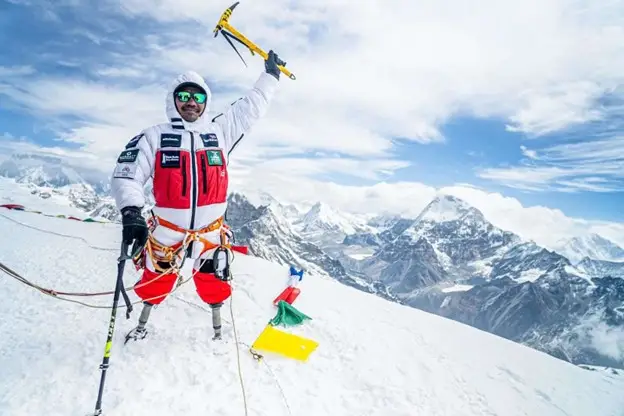
No Legs, No Limits: Hari Budha Magar’s Everest Victory And The Mindset Behind It
Summary
After losing both legs above the knee in Afghanistan, former British Army soldier Hari Budha Magar rebuilt his life through sport and extreme adventure. He progressed from Paralympic sports to mountaineering, becoming the first double above‑knee amputee to summit Mera Peak (2017) and, on 19 May 2023, to stand on the summit of Mount Everest. The article traces his early life in rural Rolpa, Nepal, his military service, the trauma and recovery after an IED, and the mental and physical training that made Everest possible.
Hari’s preparation combined innovative prosthetic use, specialised conditioning (hand‑cycling, arm swimming, treadmill work with prosthetics) and technical mountaineering practice. He adapted to climbing with steel stumps and crampons, faced amplified energy demands and unique technical hurdles (Khumbu Icefall, Hillary Step), and relied on strong support from family and the military. His message: mindset, preparation and small wins transform perceived limits into achievement.
Author style
Punchy: this is a crisp leadership parable disguised as an adventure story. It’s framed for executives — resilience, strategic planning and the value of support systems — and the author amplifies why the tactical detail matters to business leaders navigating uncertainty.
Key Points
- Hari Budha Magar lost both legs above the knee in an IED explosion while serving in Afghanistan and rebuilt his life through sport and adventure.
- He became the first double above‑knee amputee to summit Mera Peak (2017) and reached Everest’s summit on 19 May 2023.
- Recovery included confronting PTSD and alcoholism, then choosing a growth mindset and rehabilitation through Paralympic sport and extreme challenges.
- Training was highly customised: prosthetic treadmill work, hand‑cycling for endurance, arm‑only swimming and technical ice‑tool practice.
- On the mountain he used steel stumps with crampons, moved slower and burned far more energy than other climbers — turning physiological limits into tactical planning needs.
- Support from family, the British military and close teams was crucial; Hari stresses personal responsibility combined with systemic backing.
- The core message for leaders: deliberate preparation, adaptability and small, consistent wins build confidence and deliver extraordinary results.
Why should I read this?
Quick take: read it if you want a visceral reminder that mindset and planning beat excuses. It’s not just an inspiring climb — it’s a short, sharp lesson in resilience, adaptive planning and the payoff of tiny, steady wins. Good for a five‑minute morale reset or to spark a leadership conversation.
Context and relevance
Hari’s story connects directly to contemporary leadership themes: growth mindset, risk management, tailored training (people development) and the interplay between individual agency and organisational support. For CEOs and senior leaders, his journey underlines how strategic preparation and investment in support functions (HR, medical, logistics) enable ambitious, high‑risk objectives. In an era of rapid external change, the article reinforces that adaptability and incremental progress are practical tools for overcoming large obstacles.