
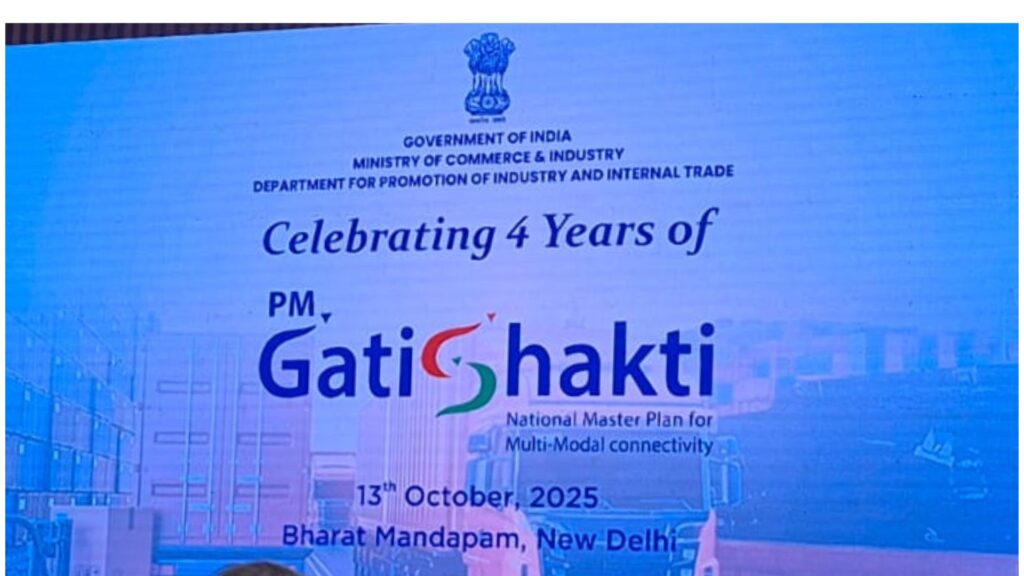
PM Gati Shakti Marks Four Years: Driving India’s Integrated and Sustainable Infrastructure Growth
Summary
The Department for Promotion of Industry and Internal Trade (DPIIT) marked four years of PM Gati Shakti at an event in Bharat Mandapam, New Delhi. What began in 2021 as a National Master Plan for Multimodal Connectivity and a digital planning platform has become a nationwide movement for integrated, data-driven infrastructure development.
The initiative pulls data from multiple ministries and departments to enable evidence-based decisions, reduce project overlap and optimise resources. Key speakers, including Shri Piyush Goyal, emphasised expansion of the platform beyond ministries and states into domains such as ocean resource mapping and digital connectivity. The event also highlighted the LEAP (Logistics Excellence Advancement and Performance) initiative and stressed infrastructure focus in aspirational districts to bridge regional gaps.
Looking ahead, PM Gati Shakti will lean further on digital tools, geospatial intelligence and coordinated planning to tie highways, rail, ports, industrial corridors and logistics hubs into a cohesive national infrastructure network that supports sustainable growth and faster project delivery.
Key Points
- PM Gati Shakti launched in 2021 as a National Master Plan for Multimodal Connectivity; now a national movement for integrated infrastructure planning.
- The platform integrates data across ministries to enable evidence-based decision-making and reduce project duplication.
- The initiative promotes inter-ministerial coordination, improving ease of doing business and ease of living through complementary project planning.
- Speakers highlighted expansion into ocean resource mapping and digital connectivity—broadening the initiative’s remit beyond transport infrastructure.
- The LEAP initiative aims to recognise logistics excellence and drive efficiency across the sector.
- Focus on aspirational districts seeks to bridge regional connectivity gaps and promote inclusive development.
- Future emphasis: digital tools, geospatial intelligence and coordinated planning to ensure projects are sustainable and optimally sequenced.
Context and Relevance
This update matters for anyone in infrastructure, logistics, urban planning or state administration. PM Gati Shakti’s shift from a planning portal to an operational movement means centralised, shared data will increasingly shape project sequencing, land use and logistics node development. For investors and operators it signals fewer surprises from overlapping approvals and a clearer route to connectivity-led value creation.
The initiative aligns with broader trends: digital governance, geospatial planning, sustainable infrastructure and targeted regional development. For logistics costs and supply-chain resilience, better-coordinated multimodal infrastructure can deliver measurable savings and performance gains.
Why should I read this?
Short version: if you work in logistics, infrastructure or planning — this is the government’s playbook being rolled out. It affects where roads, rails, ports and warehouses get built, how projects are prioritised and where money flows. Read it to know what to expect next and where the opportunities (and bottlenecks) will be.
Author style
Punchy. This is framing a national-scale policy win and a practical signal for the industry — worth a deeper read if your business depends on future routing, siting or multimodal connectivity.