
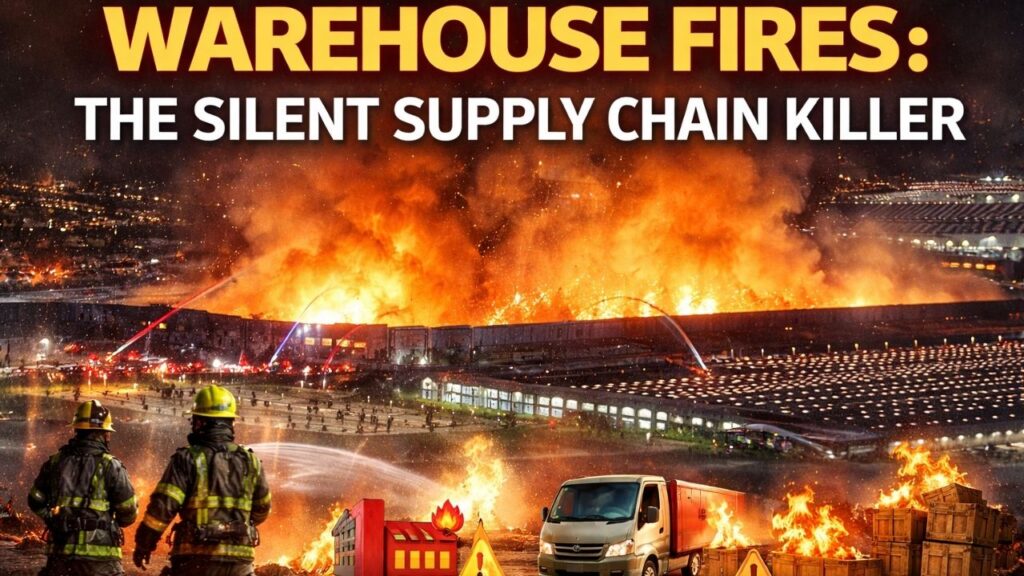
Warehouse Fires: The Silent Supply-Chain Killer
Summary
Warehouse fires are an underestimated threat to global supply chains. The article uses a recent six-alarm blaze at a 1.2 million sq ft warehouse in Ontario, California (7 April 2026) — storing highly combustible paper products — as a case study: around 175 firefighters attended, it took roughly 12 hours to control and the facility was declared a total loss with damages estimated at over $600 million. While there were no casualties reported, the operational impact was immediate: inventory destroyed and distribution halted.
The piece explains why modern consolidation and high SKU density increase fire risk and how such incidents create network-wide ripple effects, raise insurance costs and strain working capital. It also highlights similar vulnerabilities in Indian logistics hubs such as Bhiwandi and Delhi-NCR, citing causes like electrical faults, poor compliance and dense storage. The article argues firms must rebalance efficiency with resilience through decentralised networks, advanced detection and suppression (including AI) and inventory diversification.
Key Points
- Massive Ontario, California warehouse fire (7 April 2026) destroyed a 1.2 million sq ft facility; damages estimated at over $600m and firefighting operations took ~12 hours.
- Warehouse fires cause instant capacity loss — inventory and fulfilment can be wiped out overnight.
- Consolidation into large distribution centres creates single points of failure and amplifies inventory concentration risk.
- Fires trigger ripple effects across regions: stockouts, rerouting, longer lead times and higher logistics costs.
- Financial fallout includes huge insurance claims and rising premiums that can strain working capital and recovery funding.
- India’s logistics hubs (Bhiwandi, Delhi-NCR) show rising fire incidents tied to electrical faults, inadequate compliance and high-density storage.
- Practical resilience steps: decentralise network design, spread inventory across sites, invest in AI-based detection and automated suppression, and review storage of flammable SKUs.
Why should I read this?
Short and blunt: a single warehouse fire can blow away months of stock and wreck your delivery promise. If you run operations, procurement or risk, this is the kind of wake-up call that should change where you focus your next investment. We read it so you don’t have to — skim it for the risks and the quick fixes.
Context and relevance
As logistics chases scale and quick commerce raises velocity expectations, physical infrastructure risks are moving from operational headaches to strategic threats. The article connects a high-profile US incident to patterns in India and shows why warehouse fire risk must now be treated alongside supply‑chain, cyber and financial risks at board level.
Author’s take
Punchy: this isn’t a ‘nice-to-fix’ problem — it’s boardroom material. Map your single points of failure, rethink concentration of inventory and then invest to remove them before a fire forces your hand.
Source
Source: https://www.logisticsinsider.in/warehouse-fires-the-silent-supply-chain-killer/