
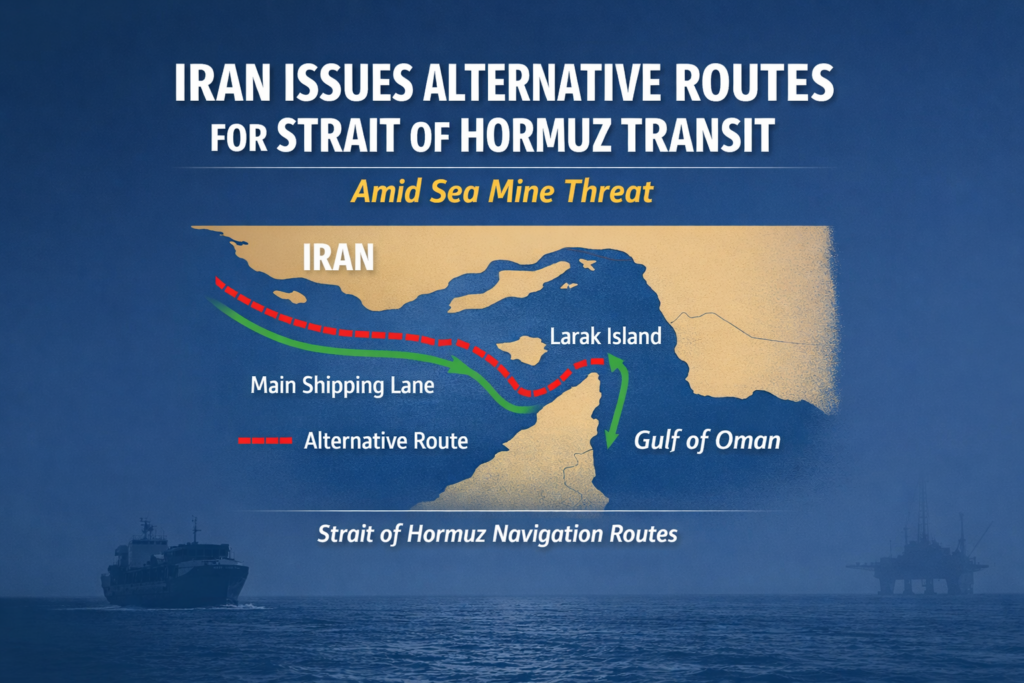
Iran Issues Alternative Routes for Strait of Hormuz Transit Amid Sea Mine Threat
Summary
Iran has issued new navigation guidance for vessels transiting the Strait of Hormuz after warnings of suspected sea mines in the main shipping lane. The advisory, carried in local media and reported by AFP, directs ships to use designated alternative routes: enter from the Sea of Oman north of Larak Island into the Gulf, and exit by passing south of Larak back to the Sea of Oman. The IRGC has also advised close coordination with its naval forces during transit. The move follows a temporary reopening of the waterway under a fragile two‑week ceasefire with the United States and aims to reduce collision and mine‑strike risks in one of the world’s busiest chokepoints.
Key Points
- Iran warns of potential sea‑mine threats in the Strait of Hormuz’s main shipping lane.
- New routing advises entering via the Sea of Oman north of Larak Island and exiting to the south of the island.
- The Islamic Revolutionary Guard Corps has urged ships to coordinate closely with its forces during transit.
- The advisory follows a temporary reopening under a fragile US‑Iran ceasefire arrangement.
- The Strait of Hormuz normally handles about one‑fifth of global oil shipments, so disruptions risk wider market volatility and supply‑chain impacts.
Why should I read this?
Because this could mess with fuel costs and shipment schedules — and you need to know the new routing now. It’s a short, sharp update on what Iran wants ships to do, why it’s happening and what the immediate risks are. Pass it to your ops, procurement or trading teams and move on.
Context and relevance
Control of the Strait of Hormuz has become strategic leverage amid the wider regional conflict involving Iran, Israel and US interests. Iran’s earlier effective closure of the passage in March disrupted energy markets and raised global concerns about maritime security. Although the strait has been partially reopened under a fragile ceasefire, the presence of suspected mines and ongoing military strikes in neighbouring areas mean the route remains a high‑risk flashpoint. Any further escalation or incidents could rapidly affect global energy flows and maritime trade routes.
Author style: Punchy — this is significant. If you work in maritime logistics, energy procurement or international trade, read the full report and update your transit risk assessments and contingency plans.