
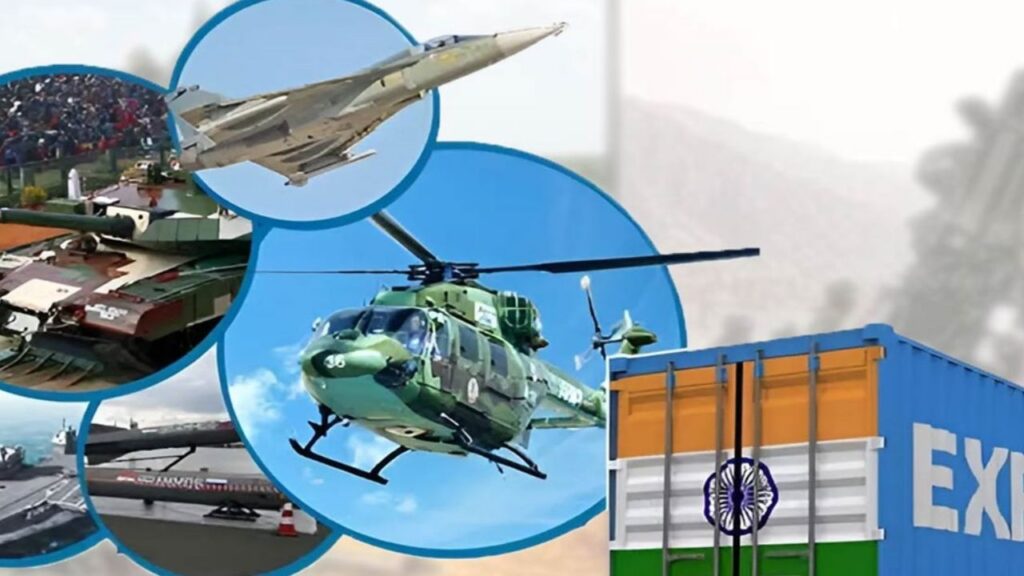
India’s Defence Exports Hit Record ₹38,424 Crore in FY26, Driven by Missiles, Artillery and Global Demand
Summary
India’s defence exports surged to a record ₹38,424 crore in FY25–26, a 62.66% rise from ₹23,622 crore the year before. The increase was led by high-value systems — notably missile platforms (BrahMos, Akash), artillery and rockets (Pinaka, ATAGS), radars (Swathi) and a range of electronic warfare solutions. DPSUs drove much of the growth (₹21,071 crore, +151% YoY), while private industry supplied armoured vehicles, UAVs, small arms and protection equipment (₹17,353 crore, +14% YoY). Indian defence goods reached over 80 countries as the number of registered exporters rose to 145, reflecting deeper integration into global supply chains and a near-tripling of exports over five years.
Key Points
- Record defence exports of ₹38,424 crore in FY26 — a 62.66% year-on-year increase.
- Defence Public Sector Undertakings accounted for ₹21,071 crore, up 151% YoY.
- Private sector contributed ₹17,353 crore, representing roughly 45% of total exports.
- Export portfolio moved up the value chain: missiles, air-defence systems, artillery, radars, EW systems, aircraft, vessels and torpedoes.
- India supplied munitions, small arms, UAVs, armoured vehicles and personal protection gear to global buyers.
- Indian defence products were exported to more than 80 countries; registered exporters rose 13.3% to 145.
- Top markets included the United States (components/sub-systems), France, Armenia, the Philippines, Indonesia, Sri Lanka, Egypt, Israel and several African nations.
- Exports have almost tripled in five years, signalling rising global trust in Indian defence manufacturing.
Context and Relevance
This milestone matters because it shows India transitioning from low-value suppliers to a maker of complex defence systems that global customers will buy. Geopolitical tensions, supply-chain reshuffling and incentives for domestic defence production have all helped create demand for Indian kit. The split between DPSUs and private firms highlights complementary roles: public units scaling ammunition and heavy systems, while private companies innovate in vehicles, drones and personal equipment. For policymakers, exporters and defence contractors, this trend reinforces the business case for continued investment in R&D, certification and export facilitation.
Why should I read this?
Short answer: because it’s the clearest sign yet that India’s defence industry isn’t just growing — it’s getting paid for serious kit. If you track defence supply chains, defence tech investment or export markets, this piece saves you time by outlining who sold what, where and why it matters now.
Author style
Punchy: think of this as a one-minute briefing that doubles as a wake-up call — record numbers, big-ticket missiles and a widening buyer list. If you care about Make-in-India, security exports or defence industrial policy, read the detail.