
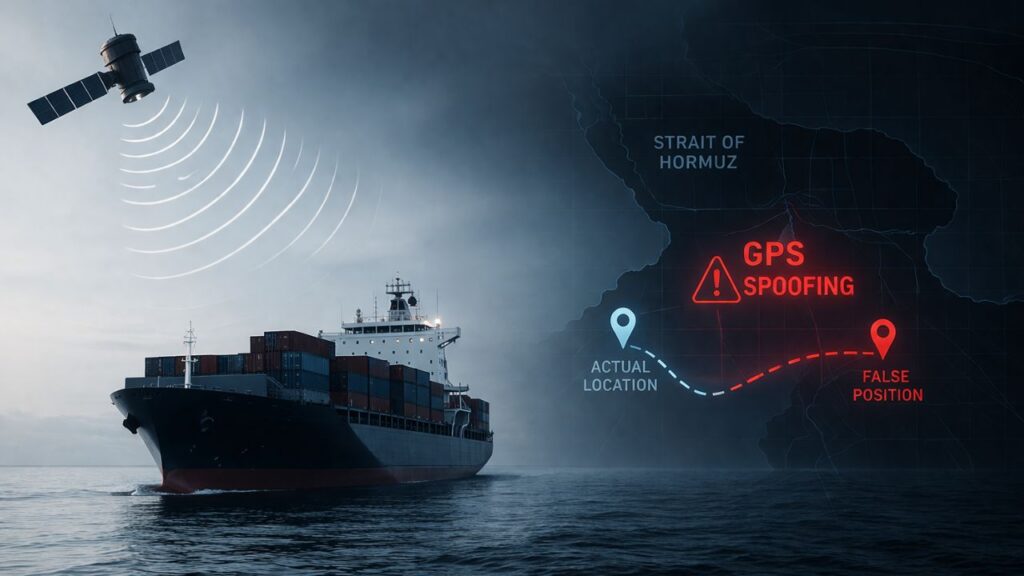
GPS Spoofing: The Invisible Threat to Modern Supply Chains
Summary
This article explains how GPS spoofing — the deliberate transmission of false satellite signals — is quietly disrupting supply chains across sea, air and land. Incidents in high‑traffic maritime areas (notably the Strait of Hormuz) made ships appear in impossible places, and aviation has seen hundreds of GPS interference events in Indian airspace in early 2026. Road freight, rail and warehouse automation also depend on precise location data, so spoofing creates a systemic operational risk: systems keep working, but on false data.
The piece contrasts spoofing with jamming (spoofing manipulates position/speed/time rather than blocking signals), outlines real consequences (misrouting, collisions, cargo theft, groundings) and gives examples — including a 2025 grounding near Jeddah and truck cargo diversion cases in Europe and Asia. It concludes by urging logistics operators to reduce single‑point reliance on GPS and adopt layered resilience measures: multi‑source navigation, sensor cross‑checks, geofencing alerts and stronger platform cybersecurity and data validation.
Key Points
- GPS spoofing feeds false satellite signals to receivers so vehicles and systems calculate incorrect position, speed or time.
- Incidents are rising globally — maritime disruptions in the Strait of Hormuz and over 600 reported GPS interference events in Delhi airspace in early 2026 show the threat is real.
- Modern logistics often treats location data as a single source of truth; that creates a single point of failure for routing, ETA calculations and automated decisions.
- Operational impacts range from inefficient routing, higher fuel costs and missed delivery windows to collisions, territorial violations, cargo theft and physical accidents (e.g. groundings).
- Practical defences include multi‑layer navigation (GNSS + inertial/odometry), onboard sensor cross‑verification, geofencing alerts, stricter cybersecurity for telematics and active validation of location data.
Author style
Punchy — this is a wake‑up call. The author stresses that GPS spoofing is not a niche cyber issue but a structural supply‑chain risk. If your business depends on tracked movement or automated location data, the article argues you should treat this as an urgent operational and cybersecurity priority.
Why should I read this?
Look — GPS can be lied to. This short read shows how that quietly breaks ships, planes, trucks and automated warehouses. If you manage fleets, run routing or rely on ETAs, this saves you time by spelling out what can go wrong and what to do about it. Read it to avoid surprises and costly blind spots.
Source
Source: https://www.logisticsinsider.in/gps-spoofing-the-invisible-threat-to-modern-supply-chains/