
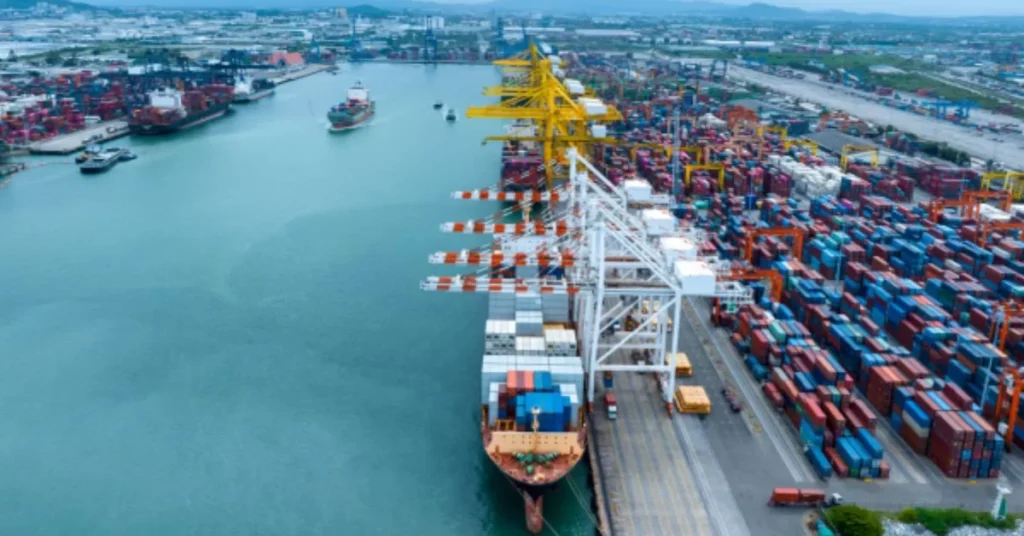
Paradip Port Hits Record 156.45 MMT Cargo in FY26, Joins Elite 155+ Club
Summary
Paradip Port Authority (PPA) recorded its highest-ever annual cargo throughput of 156.45 million metric tonnes (MMT) in FY2025–26, a 4.01% rise on the prior year. This is the port’s strongest performance since operations began in 1966.
Despite headwinds — weaker iron-ore exports and supply disruptions from the West Asia crisis affecting limestone and fertiliser inputs — Paradip kept its leadership among eastern Indian ports and remained the top bulk port nationally.
Operational efficiency underpinned the result: berth productivity hit 35,059 MT per day per berth (roughly double the national average of ~18,000 MT). Coastal traffic made up 42.06% of volumes (65.81 MMT), maintaining Paradip’s position as the leading coastal-shipping major port.
Key Points
- Total throughput: 156.45 MMT in FY25–26 — a 4.01% increase year-on-year.
- Berth productivity: 35,059 MT/day/berth — nearly double the national average.
- Coastal cargo accounted for 42.06% of volumes (65.81 MMT), reinforcing Paradip’s coastal-shipping leadership.
- Sector gains: POL +25.68%, steel +43%, coal +4.44%, containers +7.77%, flux +18.32%, LPG +105%.
- Private terminals: Kalinga International Coal Terminal +18.92%; Paradip International Cargo Terminal +19.53% — both posted record throughput.
- Finance: net surplus exceeded ₹2,000 crore for the first time; operating ratio at a record low of 31%.
- Expansion and green plans: 25 MMTPA Western Dock (JPPL) due by 2026; proposals for green hydrogen and ammonia export terminal; full mechanisation of bulk berths targeted well before 2030.
- Leadership credited a wide set of stakeholders for the outcome, acknowledging central government ministers’ guidance.
Context and Relevance
This milestone matters for anyone watching India’s maritime supply chain and commodity flows. Paradip’s mix of hinterland advantages (iron ore, coal, limestone), operational improvements and private-terminal performance signals stronger east-coast capacity for bulk and coastal trade.
Financial strength — a ₹2,000+ crore surplus and very low operating ratio — also makes the port more capable of funding expansion and green-transition projects, aligning with broader industry trends: coastal shipping growth, port mechanisation, and clean-energy export readiness (hydrogen/ammonia).
Why should I read this?
Short and blunt: if you move coal, steel, fertiliser feedstock or run shipping/logistics ops on India’s east coast, this affects capacity, rates and routing. Paradip’s record throughput and strong finances mean more reliable bulk handling and faster turnaround — and it’s planning big upgrades (Western Dock, hydrogen/ammonia). We skimmed the detail so you don’t have to — useful if you want the headline plus the bits that change decisions.
Author style
Punchy: record tonnage, sharp productivity gains, robust finances and clear expansion plans. The item reads like a wake-up call for shippers, traders and port investors — Paradip isn’t just growing, it’s gearing up for the next decade.