
Golden Entertainment to go private after shareholders approve Sartini–VICI deal
Summary
Shareholders of Golden Entertainment have approved a private‑takeover led by CEO Blake L. Sartini in partnership with VICI Properties. The master transaction agreement passed with roughly 20.4 million votes in favour, against about 208,131 opposed and 20,158 abstentions. Additional proposals, including executive compensation measures, also passed despite notable dissent on those items.
The transaction values Golden at $30 per share (a c.40% premium to its 5 November closing price) and offers shareholders approximately 0.9 VICI shares plus about $2.75 cash per Golden share. The deal includes a sale‑leaseback of seven real‑estate assets to VICI — among them The STRAT, two Arizona Charlie’s properties and other Nevada sites — and is expected to close in Q2 2026 subject to regulatory approvals. After closing, Golden will be delisted from Nasdaq and deregistered under the Securities Exchange Act.
Key Points
- Shareholder vote: 20.4 million votes in favour; the master transaction agreement passed decisively.
- Deal terms: $30 per share valuation (~40% premium); consideration of ~0.9 VICI shares plus ~$2.75 cash per Golden share.
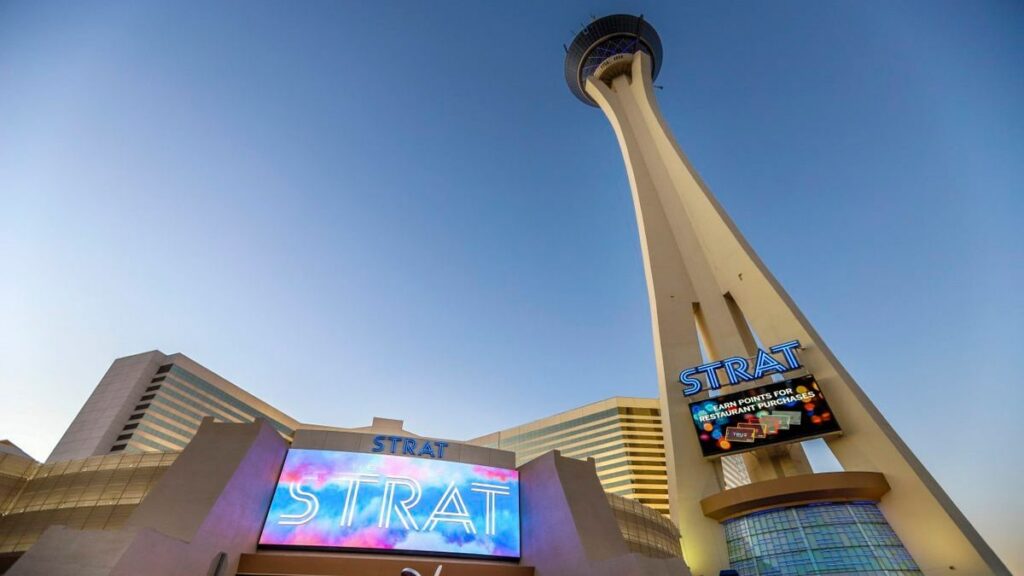
- Sale‑leaseback: Seven casino real estate assets (including The STRAT and two Arizona Charlie’s) will be sold to VICI Properties as part of the transaction.
- Timing and status: Transaction expected to close in Q2 2026, subject to regulatory approvals and customary closing conditions.
- Corporate change: Golden will cease public trading — shares delisted from Nasdaq and deregistered under the 1934 Act on completion.
- Company scale: Golden operates eight casinos and 73 gaming taverns in Nevada (c.5,500 slots, 80 table games, ~6,000 hotel rooms; ~5,000 employees).
- Financial backdrop: Golden reported Q4 adjusted EPS of -$0.33 (miss) and revenue of $155.6m (also below expectations); analysts expect a return to profitability this year.
- Counterparty: VICI is an S&P 500 REIT owning 93 experiential assets (including 54 gaming properties) with a substantial hotel/real‑estate portfolio.
Context and relevance
This deal is significant for both the Nevada gaming sector and the specialised REIT market. It pairs an operational casino operator with a major experiential real‑estate owner, shifting property ownership to VICI while keeping operations with Golden under private control. Sale‑leaseback structures like this are increasingly common in gaming as operators monetise real estate to strengthen balance sheets or de‑risk operations.
For investors and industry watchers, the transaction changes where value sits — from a publicly traded operator to a REIT/privately held operator combo — and removes Golden from public reporting after close, which will limit future public financial transparency. It also highlights consolidation trends in casino real estate and the continuing appetite from large REITs for experiential assets.
Why should I read this?
Short version: if you follow Nevada casinos, gaming M&A or REIT plays, this matters. Big premium, major assets changing hands, and Golden going private removes a public operator from the market — that reshapes local competition and owner structures. We skimmed the numbers and the timeline so you don’t have to — quick hit, big impact.