
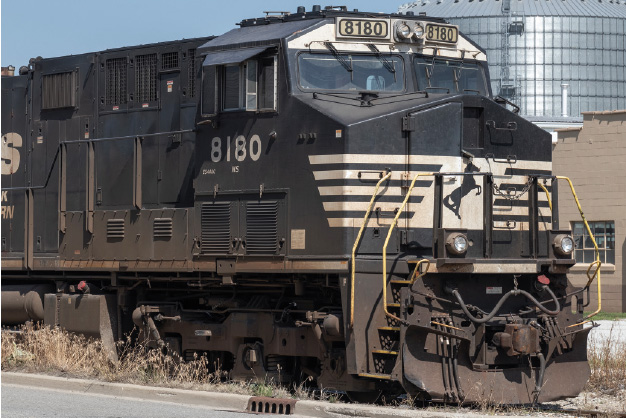
Union Pacific–Norfolk Southern Merger: Reshaping the rail industry
Summary
The article examines Union Pacific’s proposed acquisition of Norfolk Southern, which would create the first true transcontinental railway in the continental United States. It outlines the long trend of consolidation in Class 1 rail, the scope of the proposed combined network (over 50,000 miles across 43 states), and competing views: UP’s case for efficiency and new single-line services versus opposition from rival carriers and shippers worried about reduced competition, higher costs and service risks.
Key Points
- Rail consolidation has reduced Class 1 carriers from 71 in 1970 to a core few today, with this merger forming a single transcontinental railway across 43 states.
- BNSF, CPKC, CN and CSX oppose the deal, warning it could concentrate roughly 40% of US rail freight under one company and reduce shipper choice.
- Union Pacific argues the combined tonnage would still be comparable to BNSF and promises up to $2.75bn in annualised synergies and operational benefits.
- UP claims the merger would convert many interline lanes into faster single-line services and could shift up to 2 million truckloads onto rail, relieving highway congestion.
- Shippers and the Rail Customer Coalition fear reduced competition, higher prices and possible service “melt-downs” from complex integration.
- UP proposes remedies including Committed Gateway Pricing (CGP), $2.1bn integration investment and a major locomotive modernisation programme to limit disruption.
- Short-line and regional operators could gain opportunities as the combined carrier sheds unprofitable trackage.
- Regulatory conditions are likely; the central question is whether required concessions make the deal uneconomic or manageable.
Content summary
The piece starts with a historical perspective on consolidation in the US rail sector and positions the UP–NS proposal as a watershed. It presents both sides: UP’s view that the combination is an end-to-end merger that will unlock single-line efficiency, expand service to underserved markets and deliver significant synergies; and opponents’ concerns that the scale of consolidation will reduce competition, eliminate intermodal lanes and risk service reliability.
The article details UP’s mitigation proposals—Committed Gateway Pricing, investment pledges, and technology-driven operating improvements—and contrasts these against sceptics citing past merger failures and the potential for regulatory remedies to erode the deal’s economics. It closes by noting that while the business case is not obviously compelling either way, precedent suggests the transaction is likely to proceed, probably with conditions.
Context and relevance
This merger matters because it could reshape North American freight flows, influence modal shift between road and rail, and alter bargaining power between carriers and shippers. For logistics managers, shippers and carriers, outcomes will affect pricing, access to capacity, routing options and resilience of supply chains, especially for traffic crossing the Mississippi and for intermodal lanes linking major gateways.
Author take
Punchy: Brooks Bentz frames the deal as both opportunity and risk. He spotlights the unusual nature of an end-to-end transcontinental tie-up, the operational complexity of integrating two large networks, and the political and regulatory fights that will follow. If it goes through with limited concessions, the industry could see meaningful service improvements; if not managed well, customers may suffer higher costs and degraded service.
Why should I read this?
Quick and useful — this article gives you the essentials without faff. If you move freight, manage transport procurement, or advise shippers, you need to know how this could change lanes, prices and capacity. It flags who wins, who loses and what regulators might demand, so you can start planning scenarios now.