
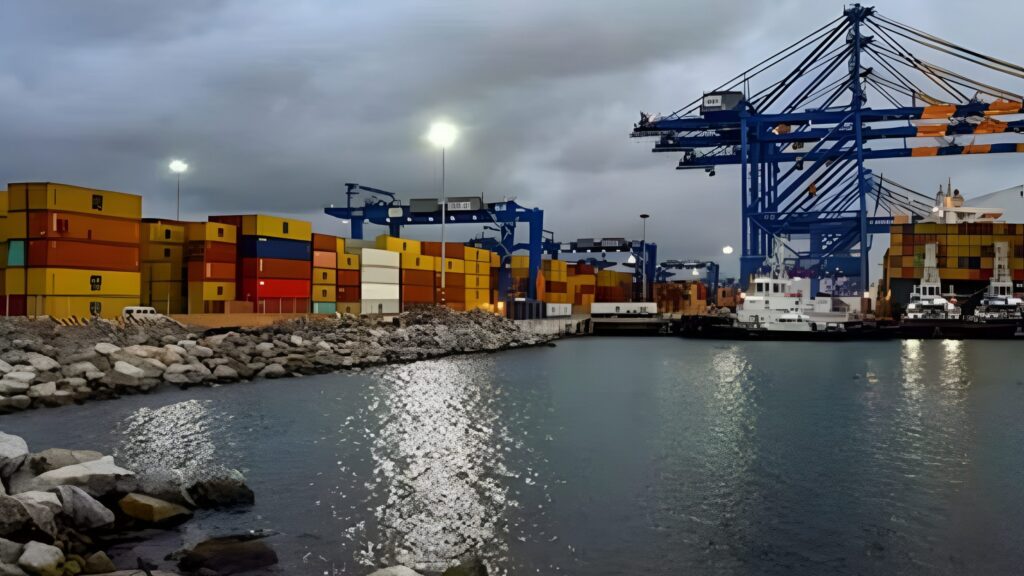
Kerala Signs ₹2,000 Crore PSU-Led Logistics Master Plan for Vizhinjam Port
Summary
The Kerala government has signed memoranda of understanding with three central public sector undertakings to deliver a ₹2,000 crore logistics master plan for Vizhinjam International Seaport. The pacts, formalised in the Legislative Assembly Complex in the presence of Chief Minister Pinarayi Vijayan, bring Indian Oil Corporation (IOC), Container Corporation of India (CONCOR) and Central Warehousing Corporation (CWC) into an integrated expansion framework led by Vizhinjam International Seaport Limited (VISL).
The plan is split across three main areas: IOC will invest ~₹700 crore for large-scale bunkering to serve mother vessels; CONCOR will invest ~₹600 crore to build rail-linked logistics infrastructure including inland container depots and container freight stations; and CWC will put ~₹700 crore into a nearly 50-acre multimodal logistics park with cold storage and export-oriented units. The state says the projects will not burden the state exchequer and aim to keep key infrastructure under public-sector oversight while the port continues to operate under a PPP model.
Key Points
- Kerala and three central PSUs — IOC, CONCOR and CWC — signed MoUs to implement a ₹2,000 crore master plan for Vizhinjam Port.
- The investment is allocated roughly as: IOC ₹700 crore for bunkering; CONCOR ₹600 crore for rail-linked logistics and ICDs; CWC ₹700 crore for a multimodal logistics park with cold chain facilities.
- The strategy aims to diversify cargo operations, improve hinterland evacuation and maintain public-sector control over critical services despite a PPP operating model.
- Planned infrastructure includes bunkering for mother vessels, inland container depots, container freight stations and a logistics park across ~50 acres with cold storage and export units.
- The state government says there will be no financial burden on Kerala’s exchequer for these projects.
- Senior officials at the signing included the Chief Minister, Ports Minister and top VISL, central PSU and ports department representatives.
Author note
Punchy: This is a proper strategic move — PSUs stepping in to plug the infrastructure and services gaps at Vizhinjam could sharpen competition, hold down costs and give the port a bigger regional role. If you’re tracking maritime logistics in south India, don’t skip the detail.
Why should I read this?
Because if you work in shipping, logistics, export-import or regional infrastructure planning, this changes the local playing field. Vizhinjam is getting bunkering, rail links and a logistics park backed by big PSUs — that means different service options, better evacuation to the hinterland and potential new export cold-chain capacity. Quick and relevant if you’re making decisions about routes, distribution or investment in the region.
Context and Relevance
Vizhinjam has been positioned as a deep-water gateway for transhipment and international calls. Bringing IOC, CONCOR and CWC into the expansion plan helps avoid concentration of cargo control, supports competitive pricing for shippers and protects national maritime interests. The bunkering capability targets mother vessels calling the Indian Ocean region, while rail-linked ICDs and a multimodal park improve connectivity to the hinterland — a persistent bottleneck for many Indian ports.
This move aligns with broader trends: strengthening port-led logistics, building multimodal connectivity, and expanding cold-chain and export facilitation. For industry stakeholders it signals opportunities for new routing, reduced dwell times and improved servicing of large ocean-going vessels. It’s also politically notable because it keeps core services within public-sector influence even as private partners run port operations.