
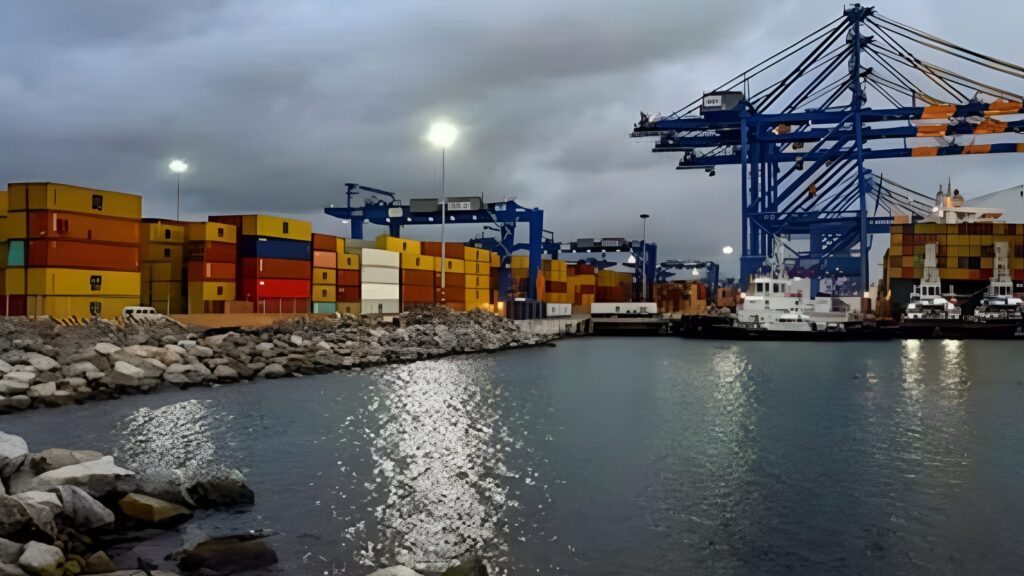
Kerala Signs ₹2,000 Crore PSU-Led Logistics Master Plan for Vizhinjam Port
Summary
The Kerala government has signed memoranda of understanding with three central public sector undertakings to roll out a ₹2,000 crore logistics master plan for Vizhinjam International Seaport. The pacts — inked at the Legislative Assembly Complex in the presence of Chief Minister Pinarayi Vijayan — bring Indian Oil Corporation Limited (IOC), Container Corporation of India (CONCOR) and Central Warehousing Corporation (CWC) into a coordinated expansion plan alongside Vizhinjam International Seaport Limited (VISL).
The package targets three main areas: large-scale bunkering (IOC), rail-linked logistics and inland container handling (CONCOR), and a nearly 50-acre multimodal logistics park with cold storage and export-oriented units (CWC). The government says the projects will not burden the state exchequer and aim to keep critical infrastructure under public-sector oversight even as the port functions under a public–private partnership model.
Key Points
- Kerala signed MoUs with IOC, CONCOR and CWC to implement a ₹2,000 crore logistics master plan at Vizhinjam.
- Investment split: IOC ~₹700 crore for bunkering facilities to service mother vessels; CONCOR ~₹600 crore for rail-linked logistics, ICDs and CFS; CWC ~₹700 crore for a multimodal logistics park (~50 acres) with cold storage and export units.
- Objective is to broaden Vizhinjam into an economic hub, avoid concentration of cargo operations and ensure competitive pricing for trade stakeholders.
- Projects are structured to protect national maritime interests while keeping key operations within public-sector oversight despite the port’s PPP arrangement.
- Officials at the signing included CM Pinarayi Vijayan, Ports Minister V N Vasavan, Ports Secretary Dr A Kowsigan IAS and VISL MD Dr Divya S Iyer IAS, plus senior PSU executives.
- The state government says the initiatives will not impose a financial burden on the Kerala exchequer.
Context and Relevance
Vizhinjam is a deep-water port strategically located near major international shipping lanes on the southwest coast of India. Adding bunkering capabilities positions the port as a potential energy-refuelling hub in the Indian Ocean, while rail-linked container infrastructure and a multimodal logistics park improve evacuation and hinterland connectivity. Together, these moves could strengthen Kerala’s role in EXIM supply chains, support perishable and export-oriented industries through cold-chain capacity, and relieve pressure on other regional gateways.
Politically and economically, the PSU-led approach signals an intent to balance private investment with public-sector control over strategic maritime services — a relevant consideration for stakeholders watching port governance, competition among Indian gateways, and infrastructure-driven regional trade shifts.
Why should I read this
Because this isn’t just another port press release. Kerala has pulled central PSUs into Vizhinjam to deliver bunkers, rail links and cold storage — the three things that actually move cargo and keep ships on the water. If you work in shipping, freight, cold chain or export logistics, this could change routing, costs and capacity in the region. Quick read, big consequences.
Author’s take
Punchy and to the point: a ₹2,000 crore PSU-backed package is a strategic bet. It beefs up Vizhinjam’s credentials — especially as a bunkering and export-supporting hub — and signals a model where public enterprises safeguard national maritime interests while scaling infrastructure.