
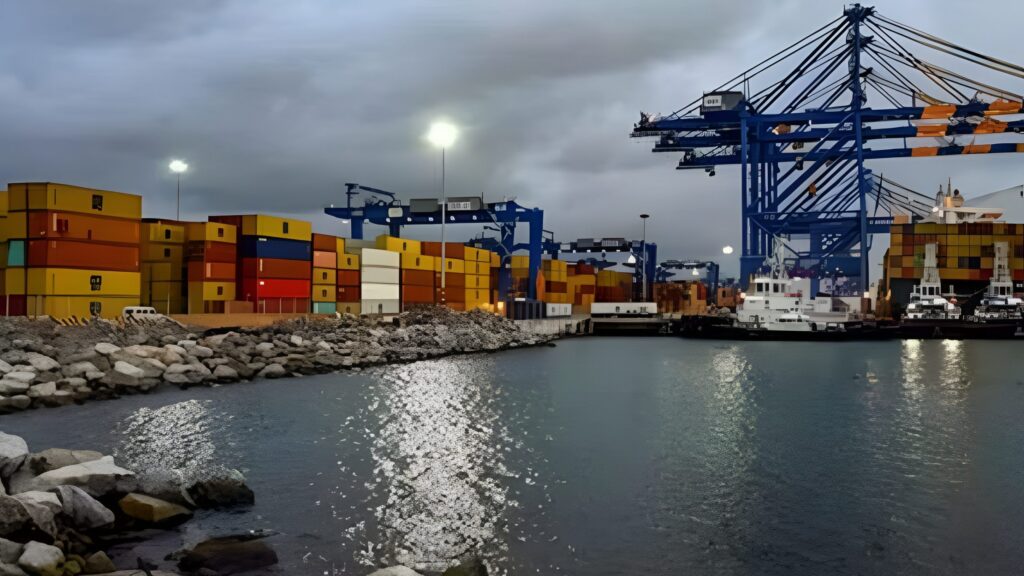
Kerala Signs ₹2,000 Crore PSU-Led Logistics Master Plan for Vizhinjam Port
Summary
The Kerala government has signed memoranda of understanding with three central public sector undertakings to roll out a ₹2,000 crore logistics master plan for Vizhinjam International Seaport. The agreements — formalised at the Legislative Assembly in the presence of Chief Minister Pinarayi Vijayan — bring Indian Oil Corporation (IOC), Container Corporation of India (CONCOR) and Central Warehousing Corporation (CWC) together with state-run Vizhinjam International Seaport Limited (VISL).
The plan keeps key infrastructure under public-sector oversight despite the port operating as a public–private partnership, and targets expansion across bunkering, rail-linked logistics and a multimodal logistics park on nearly 50 acres. The state says the projects will not burden the state exchequer.
Key Points
- Total committed investment: ₹2,000 crore, split across three PSUs and focused areas.
- IOC: ~₹700 crore for large-scale bunkering to service mother vessels and position Vizhinjam as an energy refuelling hub in the Indian Ocean region.
- CONCOR: ~₹600 crore for rail-linked logistics — inland container depots and container freight stations to boost cargo evacuation and hinterland connectivity.
- CWC: ~₹700 crore for a multimodal logistics park (~50 acres) including cold storage and export-oriented units; project financed without state budget support.
- Objective: avoid concentration of cargo operations, ensure competitive pricing, protect national maritime interests and broaden Vizhinjam’s economic footprint.
- Senior officials present: Ports Minister V N Vasavan, Ports Secretary Dr A Kowsigan IAS, VISL MD Dr Divya S Iyer IAS, and PSU leadership.
Why should I read this?
Quick and dirty: big public money, big public players, and a plan that could reshape cargo flows out of southern India. If you work in shipping, cold chain, rail logistics or export planning — this affects routing, costs and capacity. Worth five minutes, honestly.
Context and relevance
Vizhinjam has long been pitched as a deep‑water gateway for transhipment and international shipping. This PSU-driven package aims to plug gaps that have held the port back: reliable bunkering for mother vessels, rail connectivity for faster cargo evacuation and a nearby multimodal park to handle perishables and export units. The mix of central PSUs suggests a deliberate push to keep strategic services under state or central control while still leveraging the port’s PPP operating model.
For the logistics sector, the deal signals improved competitiveness for exporters in Kerala and nearby states, potential reductions in dwell time and stronger cold‑chain capacity. Strategically, enhancing bunkering and multimodal links at Vizhinjam strengthens India’s maritime infrastructure in the Indian Ocean and diversifies node concentration away from traditional hubs.