
UDAN 2.0 Explained: India’s Next Phase of Regional Air Connectivity
Summary
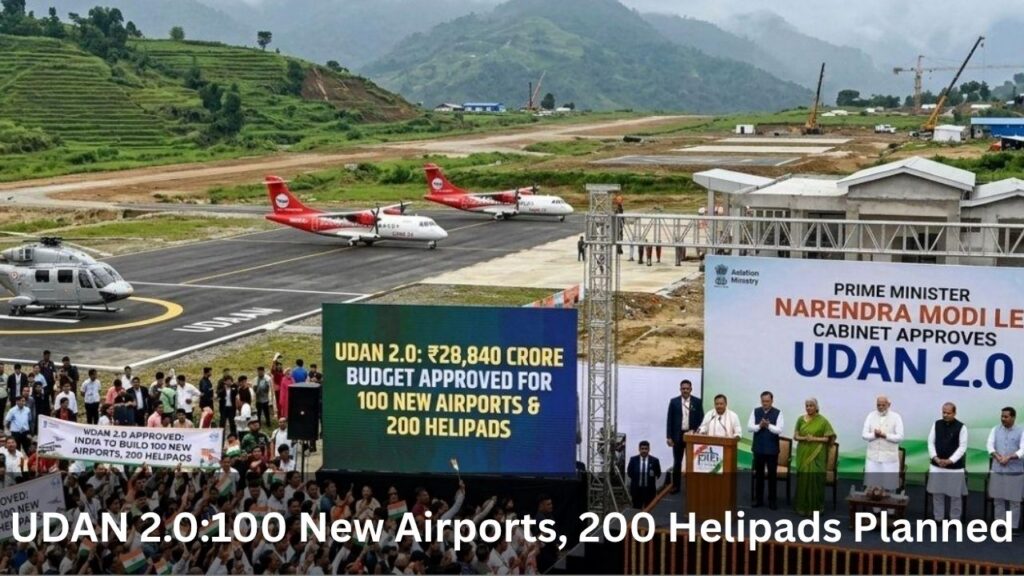
UDAN 2.0 (Ude Desh ka Aam Naagrik) is the Indian government’s decade-long programme (2026–27 to 2035–36) to deepen and stabilise regional air connectivity. Rather than only adding routes, the refreshed scheme targets the underlying ecosystem that makes services sustainable.
Key elements include a total allocation of ₹28,840 crore, a ₹12,159 crore capital outlay for upgrading and developing 100 additional airports and underused airstrips, a proposal for 200 modern helipads to plug last-mile access in difficult terrain, and fleet support through procurement of indigenous platforms (HAL Dhruv helicopters and HAL Dornier aircraft).
Operational support continues via viability gap funding (VGF) with over ₹10,000 crore set aside across the decade, and dedicated assistance for operation and maintenance of regional aerodromes for up to three years. A ₹400 crore allocation aims to boost domestic aircraft manufacturing under the Make in India push.
Key Points
- UDAN 2.0 runs from 2026–27 to 2035–36 with a ₹28,840 crore envelope focused on consolidation as well as expansion.
- Plans to develop or upgrade about 100 additional airports and underused airstrips to broaden network coverage.
- Creation of 200 modern helipads to improve access in hilly, island and remote districts for services including emergency healthcare.
- Procurement support for indigenous aircraft (HAL Dhruv, HAL Dornier) to ease fleet constraints on remote routes.
- More than ₹10,000 crore earmarked for VGF to keep low-demand regional routes viable for carriers.
- Dedicated operational and maintenance funding for regional aerodromes and a ₹400 crore incentive for domestic manufacturing to stimulate the local aerospace supply chain.
Context and relevance
The first UDAN phase proved demand exists for regional services but exposed gaps: route viability, suitable small-aircraft availability, and airport/helipad sustainability. UDAN 2.0 switches focus from rapid rollout to building a system that can sustain traffic long-term. For logistics and air-cargo stakeholders, better regional connectivity shortens transit times, opens new pickup/delivery points, and strengthens cold-chain and express networks into Tier-2/3 and remote markets.
The emphasis on helipads and smaller indigenous platforms also matters for emergency response, healthcare access and last-mile linkages where runways are impractical. The manufacturing incentive aligns with national supply-chain resilience and may reduce reliance on imports for regional aircraft and spares.
Author style
Punchy. This piece matters if your job touches regional aviation, airport ops, air cargo or last-mile logistics. UDAN 2.0 isn’t just policy paperwork — it’s a funding and infrastructure roadmap that will shape where flights (and freight) can actually operate over the next decade.
Why should I read this?
Look, if you work in logistics, run regional airports, manage route planning or move time-sensitive goods in India, this is worth two minutes. UDAN 2.0 tells you where money and support are going, what new infra to expect (airports, helipads), and how fleet and VGF changes will affect route economics. In short: it maps out the next decade of regional access — and why that will change your routes, costs and opportunities.