
Sonowal Launches ₹1,500 Crore Green and Infra Push at VOC Port
Summary
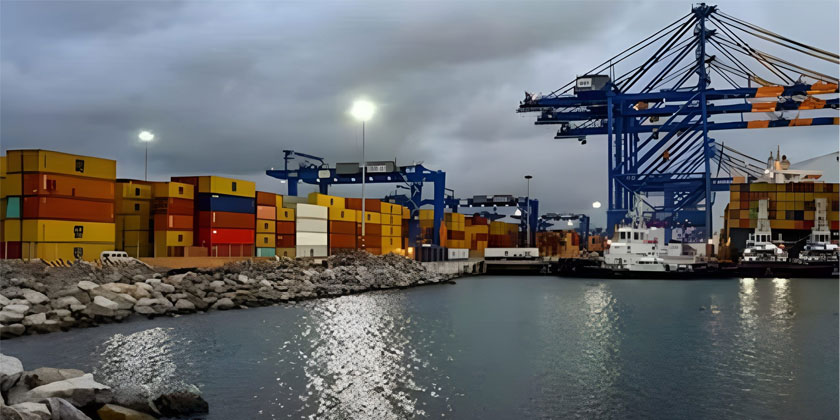
Union Minister Sarbananda Sonowal inaugurated and laid foundation stones for projects totalling over ₹1,500 crore at V.O. Chidambaranar (VOC) Port, Tamil Nadu. Completed works worth about ₹160 crore have already been delivered to boost cargo handling efficiency and sustainability — upgrades include strengthened rail and road evacuation, enhanced power systems integrating solar, wind and battery storage, improved safety infrastructure, new digital platforms (including digital twin technology) and a VOC Maritime Heritage Museum.
Foundation projects totalling roughly ₹1,340 crore were also announced. Major initiatives comprise an 8 MW wind farm with 5 MW storage, a 2 MW green hydrogen plant, a 2 MW ground-mounted solar array, smart energy management systems, ₹131 crore for rail infrastructure, ₹250 crore for shipbuilding equipment, and ₹367 crore for green tugs. The investments aim to reduce vessel turnaround times, lower logistics costs and reinforce VOC Port as a competitive transshipment and shipbuilding hub that will stimulate industrial growth in Thoothukudi, Tirunelveli and Madurai.
Key Points
- Sarbananda Sonowal inaugurated and laid foundation stones for projects exceeding ₹1,500 crore at VOC Port.
- Completed works (~₹160 crore) include upgraded rail/road evacuation, hybrid power systems (solar, wind, battery), safety improvements, and a maritime heritage museum.
- New projects (~₹1,340 crore) cover renewable generation (8 MW wind + 5 MW storage, 2 MW solar), a 2 MW green hydrogen facility and smart energy management.
- Significant capital allocated to port logistics and industry: ₹131 crore for rail, ₹250 crore for shipbuilding equipment and ₹367 crore for environmentally friendly tugs.
- Objectives: reduce vessel turnaround, cut logistics costs, strengthen VOC as a regional transshipment and shipbuilding centre and spur regional industrial development.
Context and Relevance
The package sits at the intersection of India’s port modernisation and green-energy push. Upgrading evacuation links, incorporating renewable on-site power and investing in shipbuilding/sustainability directly supports lower operating costs and resilience for exporters and carriers. For regional stakeholders — manufacturers, logistics operators and local governments — the projects signal more predictable supply‑chain capacity and new investment opportunities in ancillary industries.
Strategically, VOC Port is positioning itself to capture transshipment traffic and support inland industrial clusters in southern Tamil Nadu. The emphasis on green hydrogen, wind and storage aligns with broader national decarbonisation goals for the maritime and logistics sectors.
Why should I read this?
Quick and blunt: if you’re in ports, shipping, logistics or regional industry planning — this changes the game locally. New rail links, on-site renewables and shipbuilding cash mean faster turnarounds, lower costs and fresh business for suppliers and shippers. Plus, there’s a bit of future-proofing here (green hydrogen and storage) that’s worth noting if you don’t want to get caught behind the curve.