
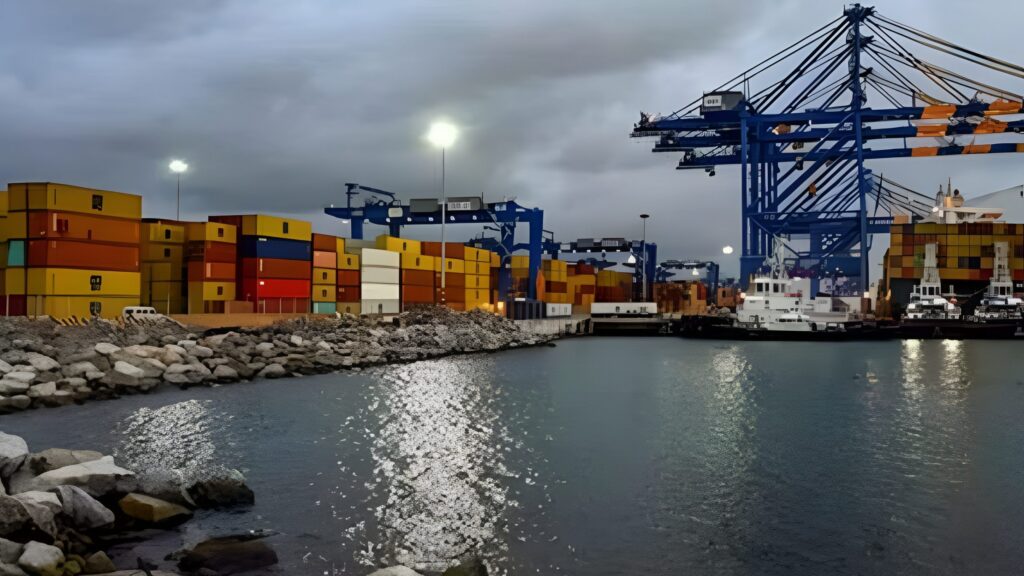
Kerala Signs ₹2,000 Crore PSU-Led Logistics Master Plan for Vizhinjam Port
Summary
The Kerala government has signed memoranda of understanding with three central public sector undertakings to implement a ₹2,000 crore logistics master plan for Vizhinjam International Seaport. The agreements — formalised at the Legislative Assembly Complex in the presence of Chief Minister Pinarayi Vijayan — bring Vizhinjam International Seaport Limited (VISL) together with Indian Oil Corporation (IOC), Container Corporation of India (CONCOR) and Central Warehousing Corporation (CWC).
The investment is split across three focus areas: IOC will spend about ₹700 crore on large-scale bunkering facilities to service mother vessels; CONCOR will invest roughly ₹600 crore in rail-linked logistics, inland container depots and container freight stations to improve evacuation and hinterland connectivity; and CWC will put in about ₹700 crore to build a nearly 50-acre multimodal logistics park with cold storage and export-oriented units. The state says these projects will not burden the state exchequer and aim to preserve public-sector oversight even as the port operates in a PPP model.
Key Points
- Kerala signed MoUs with IOC, CONCOR and CWC to develop a ₹2,000 crore logistics master plan for Vizhinjam Port.
- IOC to invest ~₹700 crore for bunkering facilities to service large mother vessels, positioning Vizhinjam as an energy refuelling hub in the Indian Ocean region.
- CONCOR to commit ~₹600 crore for rail-linked infrastructure, inland container depots (ICDs) and container freight stations (CFS) to speed cargo evacuation to the hinterland.
- CWC will invest ~₹700 crore to develop a ~50-acre multimodal logistics park including cold storage and export-oriented units; project said to be off-budget for the state.
- The plan aims to avoid cargo concentration, ensure competitive pricing for traders and protect national maritime interests while keeping key assets under public-sector participation.
Why should I read this?
Short and blunt — if you move containers, manage cold chain, ship bunkers or care about port competition on India’s south-west coast, this changes the game. Big PSU money means faster build-out, better rail links and real bunkering capacity at Vizhinjam — so your shipping windows, costs and routing choices could shift. Worth five minutes of your time, honestly.
Context and Relevance
This is a strategic push by Kerala to broaden Vizhinjam beyond a container transhipment node into an integrated logistics hub with energy and multimodal capabilities. The IOC bunkering investment signals an attempt to anchor mother-vessel business and capture bunkering demand in the Indian Ocean; CONCOR’s rail-linked plans address a frequent bottleneck for ports — hinterland connectivity; and CWC’s multimodal park supports export readiness and perishables through cold storage.
For industry stakeholders, this aligns with national trends favouring multimodal logistics parks, rail-rail connectivity and public-sector participation to keep critical maritime infrastructure resilient. It also increases competitive pressure on nearby ports and could change regional cargo flows and freight costs over the medium term.