
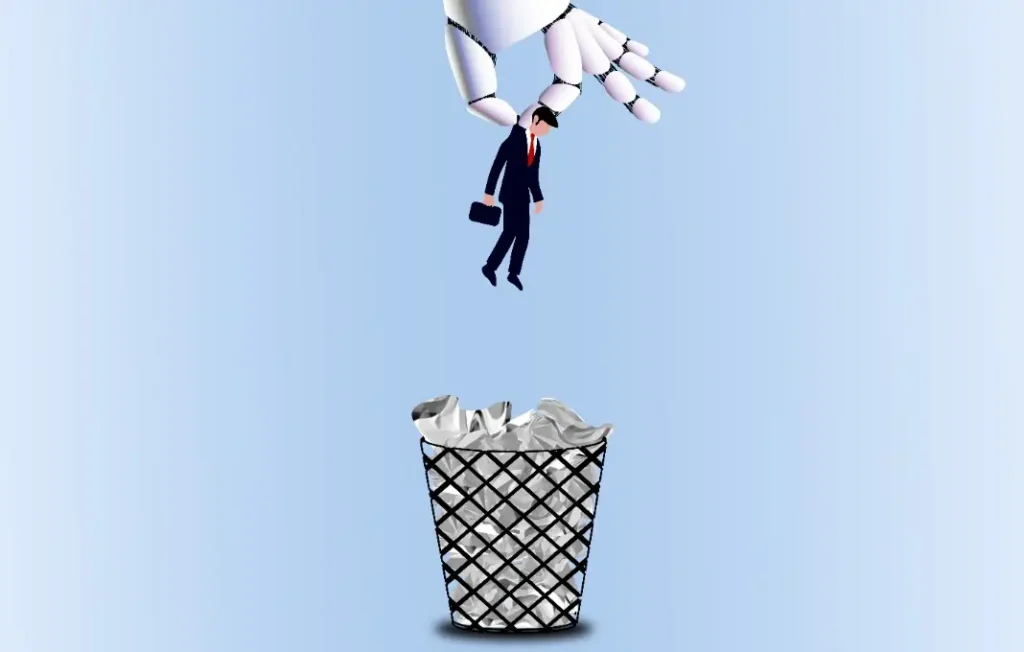
AI Will Only Replace White-Collar Jobs If We Forget What Makes Us Human
Summary
Emmanuel Gobillot argues that AI will certainly disrupt white-collar work, but it will only truly replace people if humans abdicate their agency and begin to act like machines. Using historical examples — Microsoft’s Clippy, the 18th-century Mechanical Turk and Vaucanson’s Digesting Duck — he shows how illusion and imitation can make tool use feel like replacement when in fact human choices and design sit behind the machinery.
Gobillot stresses that white-collar value lies in judgement, moral choices, culture-building and relational presence — areas where AI provides probabilistic outputs, not wisdom. He offers five practical actions professionals can adopt to remain irreplaceable: reclaim agency, understand AI limits, practise skilled authenticity, favour moral courage, and prioritise presence over sterile performance.
Key Points
- AI will disrupt white-collar roles, but inevitability is an illusion — human behaviour determines replaceability.
- Historical automata (Clippy, the Mechanical Turk, Vaucanson’s duck) show how illusion and hidden human agency can mislead us about machine capability.
- AI produces probabilistic outputs, not awareness, culture or moral judgement — those remain distinctively human strengths.
- Risk of replacement increases when professionals outsource decision-making, chase machine-like perfection, or abandon authenticity.
- Five practical steps to stay irreplaceable: ask three agency-restoring questions before adopting tools; know AI’s limits; practise skilled authenticity; choose moral courage over blind compliance; and prioritise presence.
Why should I read this?
Quick and sharp — this piece saves you time by cutting through the doom-saying and telling leaders what to actually do. If you run people or want to keep your role meaningful, it’s a short reality check: don’t let convenience turn you into an automaton. Little behavioural swaps now (ask better questions, keep your voice) keep you useful later.