
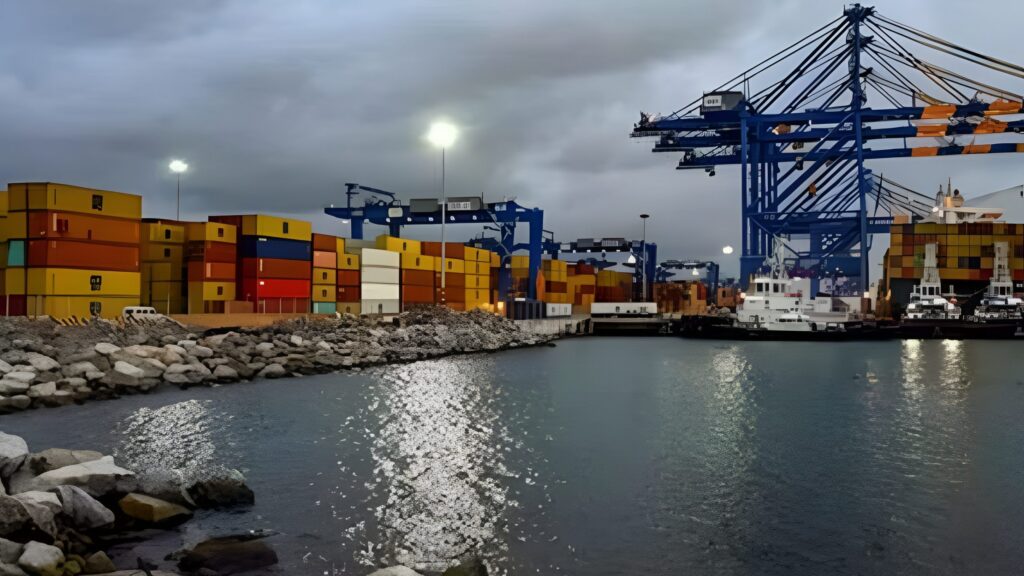
Kerala Signs ₹2,000 Crore PSU-Led Logistics Master Plan for Vizhinjam Port
Summary
The Kerala government has signed memoranda of understanding with three central public sector undertakings to roll out a ₹2,000 crore logistics master plan for Vizhinjam International Seaport. The agreements — signed at the Legislative Assembly Complex in the presence of Chief Minister Pinarayi Vijayan — bring Indian Oil Corporation Limited (IOCL), Container Corporation of India (CONCOR) and Central Warehousing Corporation (CWC) into a coordinated expansion led by state-run Vizhinjam International Seaport Limited (VISL).
The investment is split across three core areas: IOCL will invest around ₹700 crore in large-scale bunkering facilities for mother vessels; CONCOR will commit roughly ₹600 crore to rail-linked logistics infrastructure including inland container depots and container freight stations; and CWC will put in about ₹700 crore to develop a nearly 50-acre multimodal logistics park with cold storage and export-oriented units. The state government says the projects will not burden the state exchequer.
Key Points
- Kerala signed MoUs with IOCL, CONCOR and CWC to implement a ₹2,000 crore logistics master plan for Vizhinjam Port.
- IOCL to invest ~₹700 crore to build bunkering facilities to service mother vessels, strengthening Vizhinjam as an energy-refuelling hub.
- CONCOR will invest ~₹600 crore to create rail-linked logistics infrastructure (ICDs and CFS) to improve cargo evacuation and hinterland connectivity.
- CWC will invest ~₹700 crore to build a multimodal logistics park (~50 acres) including cold storage and export-focused units; no state-exchequer burden expected.
- The plan keeps critical infrastructure under public-sector oversight despite the port operating as a PPP, aiming to avoid cargo concentration and protect national maritime interests.
Context and Relevance
Vizhinjam is strategically located on India’s southwest coast close to major east-west shipping routes. The master plan combines fuel bunkering, rail connectivity and logistics/warehousing capability — a package that addresses operational throughput (bunkering and mother-vessel services), inland connectivity (rail-linked ICDs/CFS) and value-added logistics (cold-chain and export units).
For logistics providers, shipping lines and exporters, the initiative could shorten transit times, cut evacuation bottlenecks and improve competitiveness for Kerala and nearby hinterlands. Strategically, large-scale bunkering and better cargo dispersal capacity strengthen India’s presence in the Indian Ocean region and reduce dependency on a few concentrated terminals.
Why should I read this?
Quick take: if you move containers, ship bunkers, handle cold-chain or plan logistics real estate in south India — this matters. Kerala’s deal stitches energy, rail and warehousing into Vizhinjam, which could rewrite routing, costs and capacity for the whole region. We read the detail so you don’t have to — but don’t sleep on this one if it affects your supply chains.
Author style
Punchy: This is a strategic, big-ticket public-sector push that could reframe port competition and logistics flows on the Malabar coast. Stakeholders should track implementation timelines and the rollout of ICDs, CFS, bunkering licences and the multimodal park.