
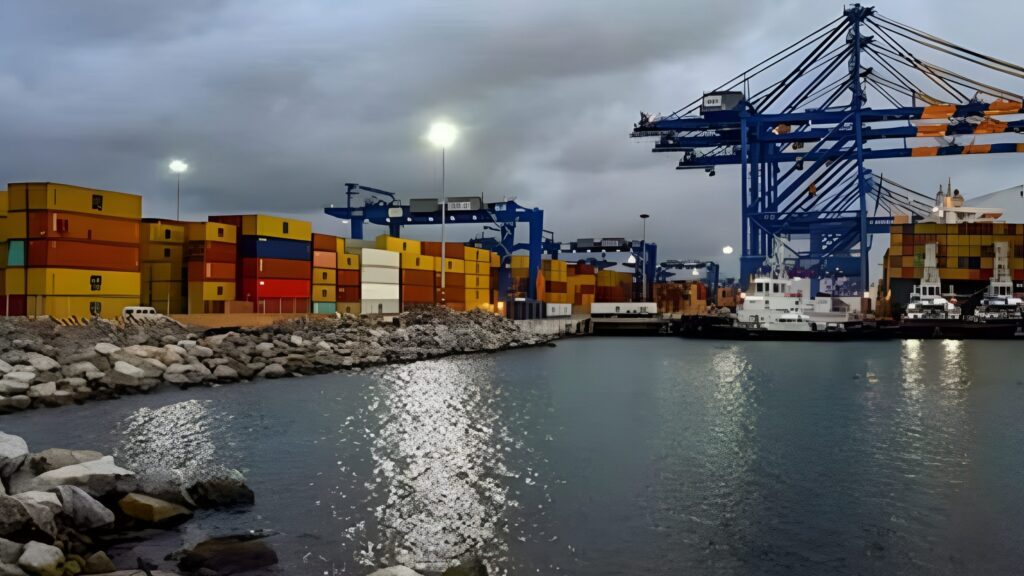
Kerala Signs ₹2,000 Crore PSU-Led Logistics Master Plan for Vizhinjam Port
Summary
The Kerala government has signed memoranda of understanding with three central public sector undertakings to roll out a ₹2,000 crore logistics master plan for Vizhinjam International Seaport. The deals were formalised at the Legislative Assembly Complex in the presence of Chief Minister Pinarayi Vijayan and senior state and central officials.
The plan brings together Vizhinjam International Seaport Limited (VISL) with Indian Oil Corporation Limited (IOC), Container Corporation of India (CONCOR) and Central Warehousing Corporation (CWC). Investment commitments are split across three focused interventions: large-scale bunkering at the port, rail-linked logistics infrastructure to improve hinterland connectivity, and a nearly 50-acre multimodal logistics park with cold storage and export-oriented units. The state says these projects will not burden the state exchequer and are intended to broaden Vizhinjam’s economic role while keeping core infrastructure under public-sector oversight despite the port’s PPP operating model.
Key Points
- Kerala signed MoUs with three central PSUs — Indian Oil, CONCOR and Central Warehousing Corporation — alongside VISL to implement a ₹2,000 crore master plan for Vizhinjam Port.
- Investment split roughly: IOC ~₹700 crore for bunkering facilities; CONCOR ~₹600 crore for rail-linked infrastructure including ICDs and CFS; CWC ~₹700 crore for a multimodal logistics park (~50 acres) with cold storage and export units.
- IOC’s bunkering project aims to service mother vessels, positioning Vizhinjam as an energy-refuelling hub in the Indian Ocean region.
- CONCOR’s rail-linked work will improve cargo evacuation and hinterland connectivity — a key bottleneck for port competitiveness.
- CWC’s multimodal park adds storage, cold-chain and export-oriented facilities, strengthening the port’s value chain for perishables and exports.
- The state emphasises public-sector oversight to avoid cargo concentration, ensure competitive pricing and protect national maritime interests.
- The signing was attended by senior officials including Ports Minister V N Vasavan, Ports Secretary Dr A Kowsigan IAS, and VISL MD Dr Divya S Iyer IAS.
Context and Relevance
Vizhinjam has long been envisaged as a deepwater gateway on India’s south-western coast; these PSU-led investments accelerate that vision by adding fuel, connectivity and logistics infrastructure. The combination of bunkering, rail-linked container logistics and a multimodal logistics park addresses three core constraints: vessel services, cargo evacuation and cargo storage/processing. For exporters, cold-chain operators and shipping lines, the package could reduce transit times and costs while shifting some maritime traffic patterns in the region.
Strategically, keeping these functions within public-sector control (even as the port operates under PPP) signals a deliberate policy to avoid dominant private concentration in critical maritime assets and to safeguard national maritime interests. The programme also aligns with wider Indian trends toward multimodal integration and port-led logistics growth.
Why should I read this?
Quick and honest — if you move containers, perishables, fuel supply or plan regional logistics, this matters. A ₹2,000 crore PSU-backed push changes what Vizhinjam can offer: fuel for big ships, better rail links out of the port, and proper cold-chain/export yards. In short, it could shift where shippers call, how exporters route cargo and which hubs grow in south India. Worth a read if you want to know where trade lanes and costs might move next.