
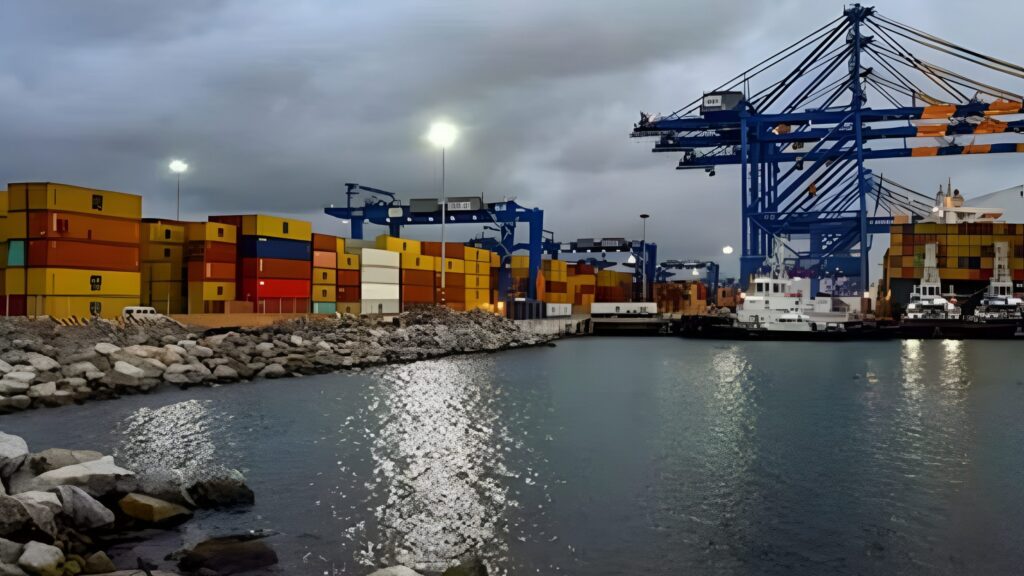
Kerala Signs ₹2,000 Crore PSU-Led Logistics Master Plan for Vizhinjam Port
Summary
The Kerala government has signed memoranda of understanding with three central public sector undertakings to roll out a ₹2,000 crore logistics master plan for Vizhinjam International Seaport. The pacts were formalised at the Legislative Assembly Complex in the presence of Chief Minister Pinarayi Vijayan and senior officials.
The package brings together Vizhinjam International Seaport Limited (VISL) with Indian Oil Corporation (IOC), Container Corporation of India (CONCOR) and Central Warehousing Corporation (CWC). The investments are aimed at broadening Vizhinjam’s role as a maritime and logistics hub while keeping key infrastructure under public-sector oversight despite the port’s PPP model.
The ₹2,000 crore is split across three main areas: IOC will invest ~₹700 crore in large-scale bunkering for mother vessels; CONCOR will invest ~₹600 crore in rail-linked logistics (inland container depots and container freight stations) to boost evacuation and hinterland connectivity; CWC will invest ~₹700 crore to build a roughly 50-acre multimodal logistics park with cold storage and export-oriented units. The state says there will be no burden on the state exchequer.
Key Points
- MoUs signed between VISL and three central PSUs — IOC, CONCOR and CWC — to implement a ₹2,000 crore master plan at Vizhinjam.
- IOC (~₹700 crore) to create bunkering facilities to service mother vessels, positioning Vizhinjam as an energy refuelling node in the Indian Ocean region.
- CONCOR (~₹600 crore) to develop rail-linked logistics infrastructure, including ICDs and CFSs, to improve cargo evacuation and hinterland links.
- CWC (~₹700 crore) to set up a ~50-acre multimodal logistics park with cold storage and export units; project said to be fiscally neutral for the state.
- Government aims to avoid cargo concentration, ensure competitive pricing for traders and protect national maritime interests while expanding the port’s economic footprint.
Context and Relevance
Vizhinjam is strategically placed near major east-west shipping lanes; these investments aim to convert the port from a terminal into a broader logistics and services hub. The mix of bunkering, rail-linked freight facilities and a multimodal park tackles several long-standing bottlenecks — vessel services, evacuation capacity and inland logistics — that have constrained throughput and competitiveness.
For logistics operators, shippers and regional planners this is an important development: it signals coordinated public-sector support to steer cargo away from single-player dominance, strengthen hinterland connectivity and support export-readiness through cold-chain and multimodal infrastructure.
Author style
Punchy: This is a proper industry move — PSUs are being lined up to fill three critical gaps in Vizhinjam’s value chain. If you care about ports, freight corridors or where container volumes will head in south India, read this properly — it’s more than a headline figure.
Why should I read this?
Quick and to the point: if you move cargo, run port-related services, or plan logistics investments in south India, this affects routing, costs and capacity. The story explains who’s putting money in, what each PSU will build and why the state says the deal won’t hit the treasury. Saves you the legwork — we read the MoUs so you don’t have to.