
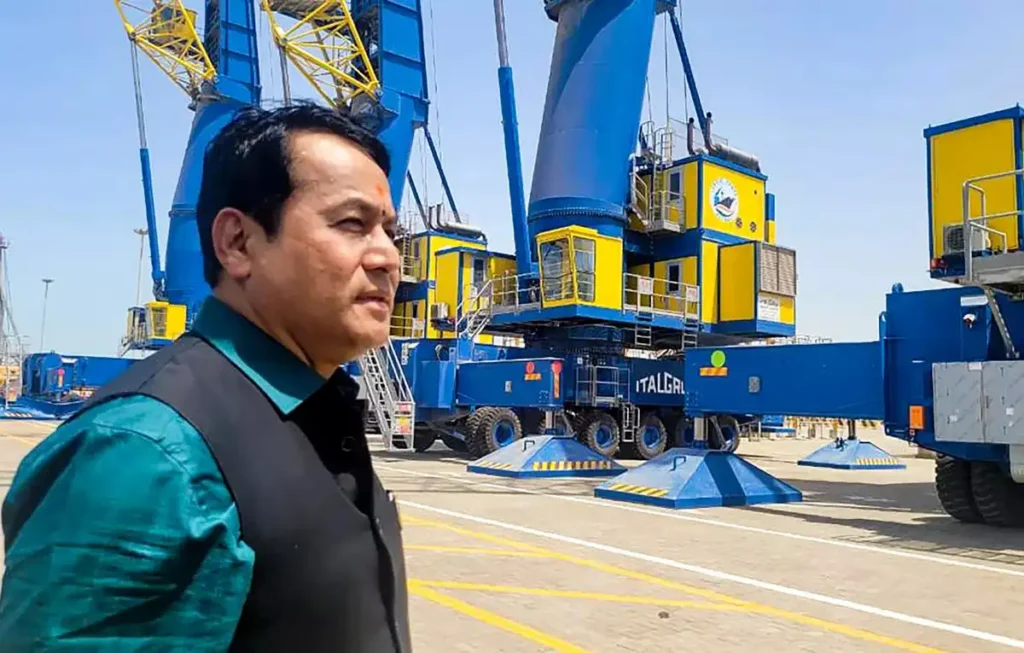
Sonowal Approves ₹472 Crore ROB Project at Tuna-Tekra to Boost Port Connectivity
Summary
Sarbananda Sonowal has approved a ₹472 crore Road Over Bridge (ROB) and associated road infrastructure at Tuna-Tekra to strengthen port connectivity and speed cargo evacuation. The civil scope covers viaducts, a creek-crossing bridge and supporting infrastructure, and includes a 10-year maintenance plan to preserve long-term efficiency and durability.
The ROB is intended as a strategic link for the upcoming Tuna-Tekra Mega Container Terminal (planned 2.19 million TEU) and a multipurpose cargo berth (capacity 18.33 MMTPA). The terminal is currently around 45% physically complete; the bridge works will be aligned with its commissioning to reduce turnaround times, ease rail bottlenecks and streamline heavy-cargo movement from the port.
Key Points
- Central approval granted for a ₹472 crore ROB and supporting road works at Tuna-Tekra.
- Project scope includes viaducts, a bridge across a creek and ancillary infrastructure with a 10-year maintenance plan.
- The ROB will serve the Tuna-Tekra Mega Container Terminal (planned capacity 2.19M TEU) and a multipurpose berth (18.33 MMTPA).
- Expected benefits: reduced vessel and truck turnaround times, smoother evacuation of heavy cargo and fewer rail bottlenecks.
- The proposal was reviewed by the Delegated Investment Board (DIB); the project aligns with Maritime India Vision 2030 and Maritime Amrit Kaal Vision 2047.
Why should I read this?
Short and informal: If you’re in ports, shipping or freight ops — this matters. A big-ticket ROB at Tuna-Tekra means fewer delays, faster ship and truck turnarounds and better flow when the huge container terminal comes online. We skimmed the full piece and pulled the bits that actually change operations — you can thank us later.
Context and Relevance
This approval is a practical step in India’s push to expand port-led logistics. By removing road/rail chokepoints ahead of the Tuna-Tekra terminal’s full commissioning, the project should help the region absorb higher container and cargo volumes, lower logistics friction and support wider trade growth ambitions. For industry stakeholders — terminal operators, shipping lines, freight forwarders and rail planners — the ROB is an enabling asset that dovetails with national maritime strategy and capacity expansion plans.
Author style
Punchy: the coverage stresses why the infrastructure move matters to maritime logistics and ties it to national maritime visions — useful detail for decision-makers and operators.