
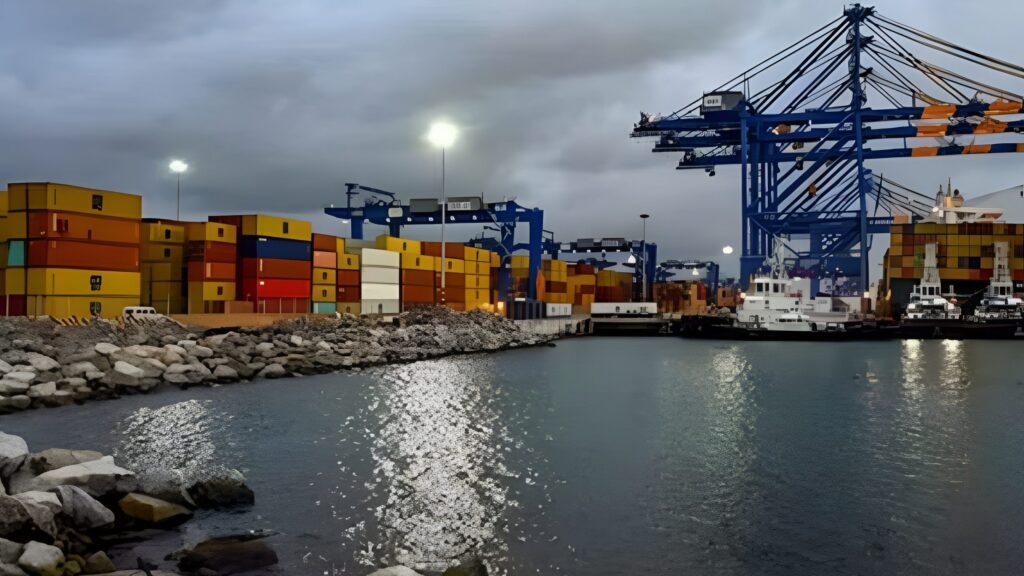
Kerala Signs ₹2,000 Crore PSU-Led Logistics Master Plan for Vizhinjam Port
Summary
The Kerala government has signed memoranda of understanding with three central public sector undertakings and state-run Vizhinjam International Seaport Limited to roll out a ₹2,000 crore logistics master plan for Vizhinjam Port. The agreements — formalised at the Legislative Assembly Complex in the presence of Chief Minister Pinarayi Vijayan — bring Indian Oil Corporation Limited, Container Corporation of India (CONCOR) and Central Warehousing Corporation (CWC) into the port’s expansion framework alongside VISL.
The funding is split across three core projects: Indian Oil will invest ~₹700 crore to build large-scale bunkering facilities; CONCOR will put in ~₹600 crore for rail-linked logistics infrastructure including inland container depots and container freight stations; and CWC will invest ~₹700 crore to develop a roughly 50-acre multimodal logistics park with cold storage and export-oriented units. The state says these projects will not burden the state exchequer.
Key Points
- Kerala and VISL signed MoUs with three central PSUs for a ₹2,000 crore logistics master plan for Vizhinjam Port.
- Indian Oil Corporation to invest ~₹700 crore to establish bunkering facilities aimed at servicing mother vessels and positioning Vizhinjam as a regional refuelling hub.
- Container Corporation of India to invest ~₹600 crore to build rail-linked logistics infrastructure, inland container depots and container freight stations to improve cargo evacuation to the hinterland.
- Central Warehousing Corporation to invest ~₹700 crore to create a ~50-acre multimodal logistics park, featuring cold storage and export-oriented units.
- The move keeps key functions under public-sector oversight even while the port operates under a public–private partnership model; it is intended to prevent cargo concentration, ensure competitive pricing and safeguard national maritime interests.
- Senior officials who attended the signing include Ports Minister V N Vasavan, Ports Secretary Dr A Kowsigan IAS and VISL MD Dr Divya S Iyer IAS.
Context and Relevance
Vizhinjam sits on a strategic shipping lane close to major east–west routes. Upgrading bunkering, rail connectivity and warehousing there directly affects regional trade flows, port competition on India’s south-west coast and logistics costs for exporters and importers. The rail-linked ICDs and freight stations will ease hinterland connectivity; the multimodal park (with cold chain) supports perishables and export-oriented manufacturing; bunkering strengthens maritime energy services and can attract more deep-sea calls. For logistics operators, shipping lines and regional planners, the plan signals a material shift in infrastructure and service availability around Vizhinjam.
Why should I read this
Short answer: because this changes where containers, fuel and cold-chain cargo can go in South India. If you move goods, run port services, or plan logistics investments in the region, the PSU-backed ₹2,000 crore package for bunkering, rail links and a big logistics park at Vizhinjam will affect costs, transit times and routing. Read the quick bits above — they save you time and tell you what will actually matter for operations.
Author style
Punchy: This isn’t a small upgrade — it’s a concentrated public-sector push that could reshape Kerala’s maritime footprint. If you’re in shipping, freight or infrastructure investment, the details here deserve a proper look.