
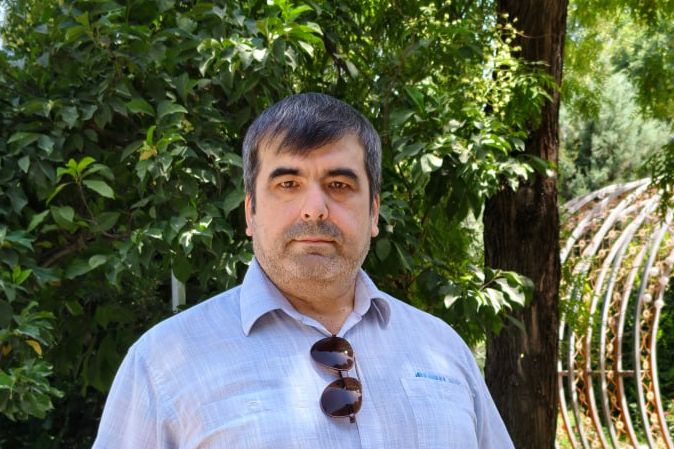
Aleksey Safaralikhonov: Predictability depends less on technology choices and more on whether change is managed as a business system.
Summary
Aleksey Safaralikhonov, an award-winning business transformation leader, argues that predictable large-scale modernisation comes from treating change as a managed business system rather than a sequence of tool swaps. Drawing on projects across Europe, the Middle East and Central Asia, he explains how clarifying process flows, ownership and escalation routes — before changing systems — makes upgrades controllable and repeatable. His work includes multi-version ERP upgrades across nearly 40 legal entities, Big Data governance at petabyte scale, and implementations that saved over $1 million annually through consolidation and automation. He has been recognised with national and international awards and serves on industry juries.
Key Points
- Predictability hinges on managing change as a business system: clear processes, ownership and decision rights matter more than specific technologies.
- Design incident handling as an operational system with defined ownership and escalation to avoid issues circulating between teams.
- Standardise intake, analysis and resolution processes across regions to remove delays from handovers and differing expectations.
- Governance and clarity of data ownership are decisive in large Big Data environments; align data outputs with business needs rather than technical convenience.
- Treat preparation as a first-class phase for ERP upgrades: document real-world processes, local workarounds and dependencies to enable incremental, low-risk upgrades.
- High-impact projects show a visible operational footprint: fewer handoffs, fewer exceptions and predictable behaviour under load.
- CEOs should integrate analysis into the management rhythm so analytical outputs become recurring inputs to decisions and improve over time.
- The biggest current gap is process ownership for automated decision flows — without clear owners and escalation, automation increases uncertainty at scale.
Content summary
Safaralikhonov stresses that disruption often follows when organisations upgrade tools but leave processes, ownership and decision rights undefined. In incident management, he ensured L3, R&D and adjacent teams had separated responsibilities and a predictable escalation path, enabling 80–90% of critical requests to be resolved within 24 hours globally. In Big Data governance at Luxoft, he prioritised shared rules for data ownership, quality standards and decision boundaries so the system could be steered without constant firefighting. At Acronis, exhaustive documentation of existing finance, sales and tax processes across nearly 40 entities revealed hidden dependencies and allowed incremental upgrades across multiple major versions while keeping operations stable, delivering significant cost savings.
His awards and jury roles reflect projects proven under operational and revenue pressure rather than theoretical frameworks. He emphasises that mature initiatives solve one hard problem fully, leave a traceable decision flow, and are stable under load — all indicators that an approach will scale.
Context and relevance
With enterprises accelerating cloud migrations, AI and automation, the article is timely: it shifts the focus from technology selection to organisational design. For executives and transformation leads, the piece highlights lessons that reduce upgrade risk and protect revenue streams — essential as automated decisions increasingly affect pricing, compliance and customer experience. The guidance aligns with ongoing industry trends that prioritise governance, process ownership and measurable operational outcomes over tool-centric projects.
Why should I read this?
Short version — stop worshipping shiny tools. If you’re running big IT change or relying on automated decisions, this is the no-nonsense checklist you need: map how work actually happens, name who’s accountable, nail down escalation rules, and sequence upgrades. Read it and you’ll avoid the usual chaos when systems change.