
Building Trust ‘Inside Out’
Summary
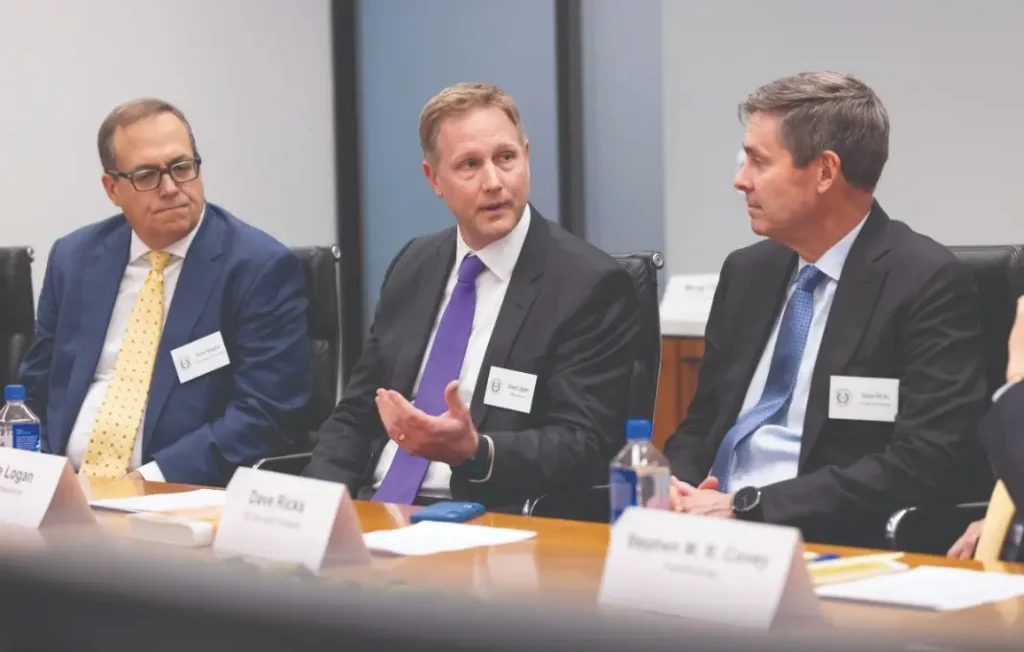
At Chief Executive’s 2025 CEO of the Year roundtable, senior leaders tackled the erosion of public and organisational trust amid AI, geopolitical volatility and social division. The discussion framed trust as a learnable skill and a leadership competency: actions — especially during high-stress moments — matter far more than words. Leaders described practical moves that build trust from the inside out: showing up for employees and customers in crises, modelling vulnerability while demonstrating competence, democratizing AI tools to reduce fear, investing in coaching and development, and shifting away from command-and-control practices to transparent, growth-focused cultures.
Key Points
- Trust is a skill and competency leaders can develop rather than a fixed trait.
- High-stress moments are prime opportunities to build trust by what organisations actually do, not what they say (examples from PURE Insurance and Eli Lilly).
- Leaders should balance vulnerability with demonstrable competence to earn and maintain confidence.
- Democratising AI (licenses, Copilot access, education) reduces fear and turns technology into a trust-building productivity tool.
- Modern leadership favours transparency, development and investing in people (coaching, clear growth pathways) over punitive, rank-and-yank systems.
- Talent evaluation should focus on growth and potential (nine-box used as a development tool, not as an exit decision).
- Getting trust right internally creates a competitive advantage and is the starting point for restoring wider societal trust.
Context and Relevance
Organisations face heightened scrutiny as AI adoption and social polarisation accelerate. This roundtable underscores a practical leadership playbook: involve employees in technology adoption, show up decisively in crises, and prioritise development over culling. For CEOs and senior leaders, those moves are directly linked to retention, reputation and operational performance — and they signal how companies can influence broader social trust by modelling better internal behaviour.
Why should I read this?
Because it’s short, sharp and useful — a no-nonsense briefing from front-line CEOs about what actually builds trust. If you want pragmatic examples (how to act in a crisis, how to introduce AI without terrorising your teams, and how to make talent processes feel fair and developmental), this saves you time and gives clear next steps.
Source
Source: https://chiefexecutive.net/building-trust-inside-out/