
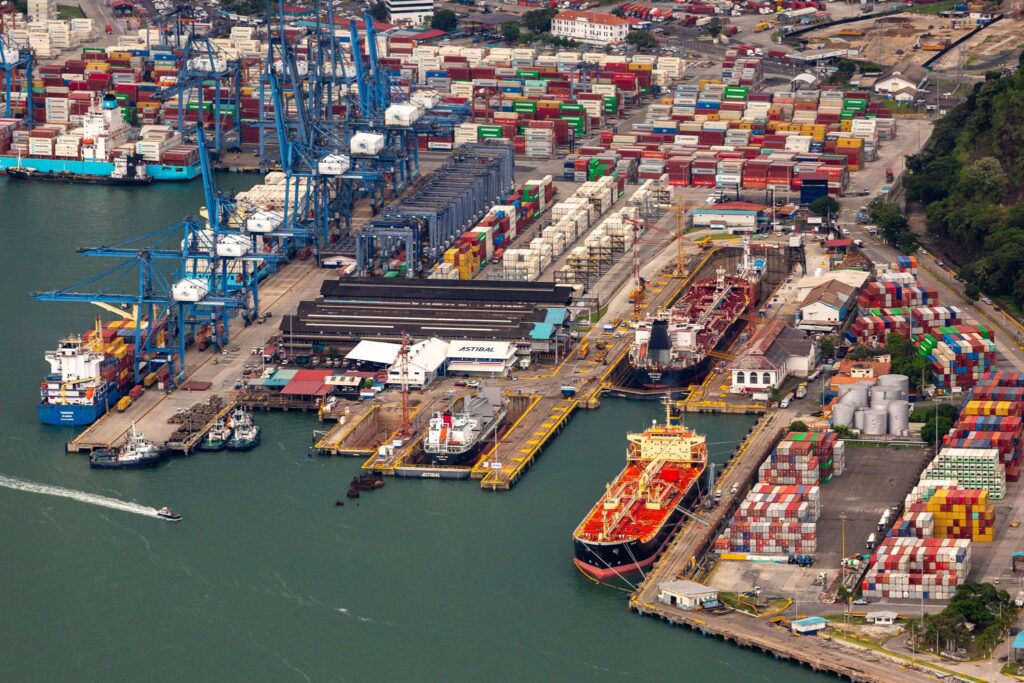
Panama Voids Canal Port Contracts, Rattling Global Investors
Summary
Panama’s Supreme Court has annulled long-standing concessions allowing a Hong Kong-based company to operate two container ports tied to the Panama Canal. The judgment throws into doubt the sale of those assets — part of a larger roughly $22.8bn transaction involving a consortium led by BlackRock and MSC — and has triggered immediate financial uncertainty for investors and dealmakers.
Key Points
- The Supreme Court annulled port concession contracts held by a subsidiary of CK Hutchison, affecting two of the canal’s five main container ports.
- The ruling threatens the transfer and valuation of assets included in a planned $22.8bn sale involving BlackRock and MSC.
- The canal’s logistical operations continue, but the decision creates financial and legal uncertainty around asset ownership and investment security.
- The case underscores how geopolitics — perceptions around Chinese-linked business interests — can convert commercial contracts into political flashpoints.
- Consequences include frozen transactions, tougher financing, extended due diligence and higher risk premiums for cross-border infrastructure deals.
Content Summary
The court found the laws underpinning the concessions unconstitutional, a conclusion contested by the operating company. Although CK Hutchison is not state-owned, its Hong Kong base has amplified geopolitical concerns among investors and US officials. Immediate effects are financial: buyers and lenders are reassessing exposure, and the broader market is re-evaluating the assumed stability of long-dated infrastructure contracts.
Legal challenges and negotiations are likely to follow, but any resolution will probably change how such assets are priced and structured going forward. Even if deals are salvaged, they will carry new political and legal caveats that reduce the certainty investors previously relied upon.
Context and Relevance
This ruling matters because the Panama Canal is central to global maritime trade (around 14,000 ships a year, roughly 5% of maritime volume). Port assets connected to the canal have been treated as low-risk, bankable infrastructure; the court verdict fractures that assumption. The decision is symptomatic of a wider trend: politically sensitive, cross-border infrastructure is increasingly vulnerable to legal and sovereign interventions, raising the cost and complexity of financing such assets worldwide.
Why should I read this?
Because if you invest in or finance infrastructure, this is a proper wake-up call. Deals you thought were rock-solid can be upended by courts or politics — years after signing. Read it to avoid getting blindsided and to rethink risk assumptions for politically exposed assets.
Author note
Style: Punchy. This is high-impact news for C-suite, investors and deal teams — not just another legal spat. If you care about global trade routes, sovereign risk or large-scale M&A, the details here could change your strategy.
Source
Source: https://www.ceotodaymagazine.com/2026/01/panama-voids-port-contracts-money-reversal/