
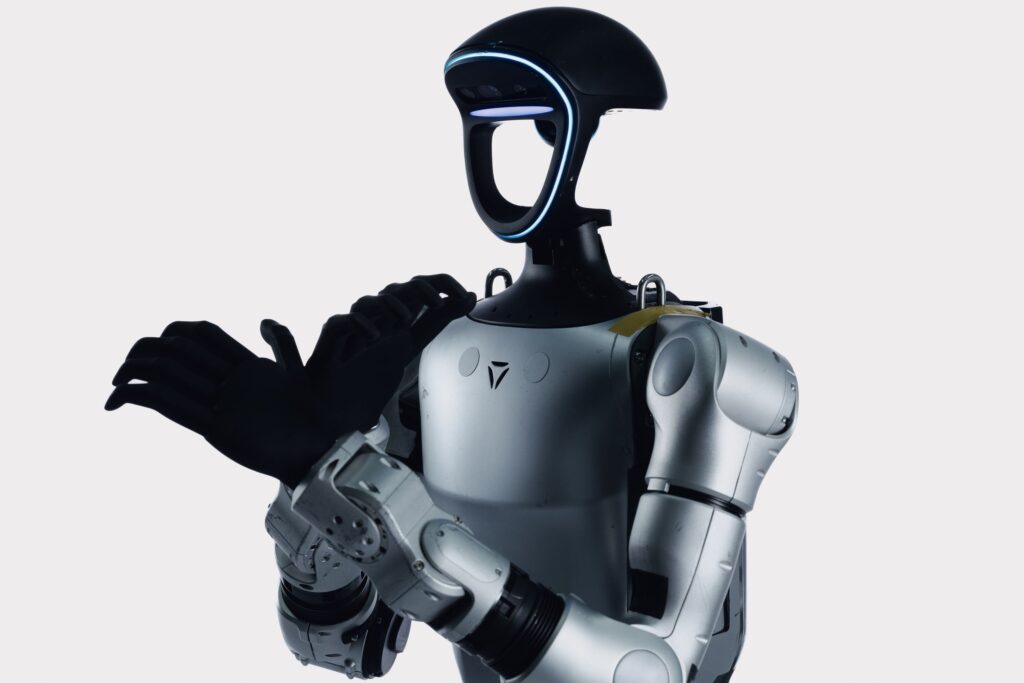
Your First Humanoid Robot Coworker Will Probably Be Chinese
Summary
The WIRED piece by Will Knight examines the rapid rise of Chinese humanoid-robot makers and why those machines are the most likely candidates to appear alongside humans in workplaces first. Knight describes early prototypes that look promising yet imperfect — quick, a little ungainly, and limited in fine dexterity — and explains how China’s manufacturing scale, investor capital, and government coordination are accelerating development.
The article flags safety and usability issues, the uneven maturity of control software and manipulation skills, and the likely near-term use cases: repetitive, industrial and logistics tasks where speed and cost matter more than delicate handling. It also places the robotics race in a broader geopolitical and industrial context, arguing that the combination of fast hardware iteration and cheap supply chains gives Chinese firms an edge in getting humanoids into the field sooner than Western competitors.
Key Points
- Chinese companies are pushing humanoid-robot development faster, aided by manufacturing scale and ample capital.
- Current humanoid prototypes are impressive in mobility and speed but still lack fine dexterity and reliable, safe behaviours for mixed human workplaces.
- Early deployments will favour tasks in factories, warehouses and logistics where robustness and cost-effectiveness trump delicate manipulation.
- Regulation, safety standards and public trust remain major barriers to widespread human–robot collaboration.
- Software (AI, perception and control) is catching up but remains a limiting factor — integration between model-led intelligence and physical control is critical.
- Geopolitical and supply-chain advantages give Chinese firms a time-to-market lead over many Western rivals.
- The story is emblematic of a broader trend: physical AI (robots + models) is becoming strategically important for industry and national technology policy.
Why should I read this?
Short version: if you care about automation, factories, logistics or the future of work, this is where the action is — and it’s moving fast. The article saves you sifting through hype by showing who’s actually shipping hardware, what it can do now, and what still falls flat. Plus it explains why the next generation of robot coworkers will probably come from China, not because of sci‑fi vibes but because of real-world manufacturing and investment muscle.
Author style
Punchy. Knight keeps the narrative brisk and focused: you get vivid scenes of wobbling prototypes and clear analysis of the industrial forces behind them. If the topic is relevant to you, this section of the article is worth reading in full — it points to practical implications for businesses, regulators and technologists.
Context and relevance
The piece matters because it ties several big trends together: advances in machine learning, cheaper sensors and actuators, China’s manufacturing ecosystem, and rising investor interest in physical AI. Together these make it likely we’ll see humanoid robots in commercial settings before long. That raises questions about workplace safety, job redesign, supply chains and international competition in high-tech manufacturing.
Source
Source: https://www.wired.com/story/china-humanoid-robot-coworkers/