
Gujarat Rolls Out Long-Term Logistics Master Plan with ₹1.80 Lakh Crore Investment Shelf
Summary
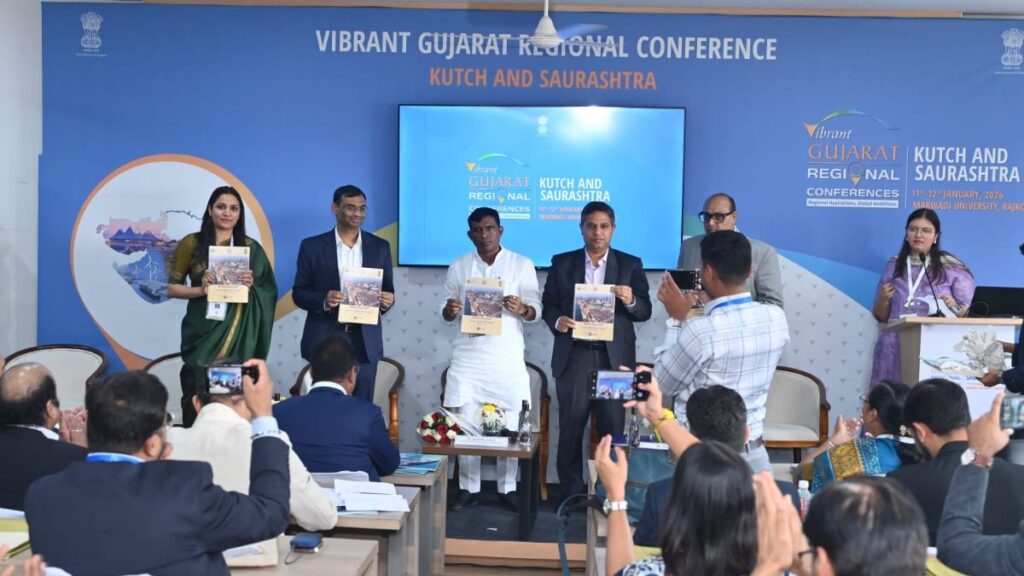
The Gujarat government has unveiled a State Integrated Logistics Master Plan (ILMP) and City Logistics Plans (CLPs) for Rajkot, Bhavnagar, Jamnagar and Junagadh. Announced at the Vibrant Gujarat Regional Conclave, the strategy includes a project pipeline worth over ₹1.80 lakh crore stretching to 2047.
The plan sets a multimodal framework — road, rail, air and sea — to lower transportation costs, improve supply-chain efficiency and strengthen port and industrial corridor links. City-level measures target congestion, last-mile connectivity and low-emission freight movement. Digital planning tools, logistics parks and multimodal hubs are core elements to attract investment in manufacturing, MSMEs, exports and e-commerce.
Key Points
- State ILMP plus CLPs for four cities launched; project pipeline exceeds ₹1.80 lakh crore through 2047.
- Multimodal focus across road, rail, air and sea to reduce logistics costs and boost efficiency.
- City Logistics Plans aim to tackle congestion, improve last-mile connectivity and promote cleaner freight movement.
- Priority actions include logistics parks, multimodal hubs, better port–corridor links and digital planning tools.
- The plan aligns with national reforms and the PM Gati Shakti initiative, increasing Gujarat’s investor appeal.
- Expected outcomes: stronger export and manufacturing ecosystems, more jobs, and better support for MSMEs and e-commerce.
- Implementation will require coordination across agencies, private investment and careful land/funding management.
Context and Relevance
Gujarat already ranks highly on logistics ease and this long-horizon plan cements that position. For logistics operators, developers and investors it signals a steady pipeline of infrastructure and urban freight projects. The ILMP’s alignment with PM Gati Shakti and national logistics reforms means state projects are likely to dovetail with central corridors and port upgrades — amplifying benefits for exporters and manufacturers.
The city-level plans reflect a broader trend: states moving from ad-hoc projects to integrated, digital and sustainable freight planning. Success will hinge on execution, private-sector partnerships and timely connectivity between ports, industrial clusters and multimodal hubs.
Why should I read this?
Short version — this matters if you ship, store, build or invest. Gujarat just put a huge, long-term bet on logistics: new hubs, better port links and city freight fixes. That means contracts, land and warehousing opportunities, and faster routes for exporters. Read on if you want to spot where the action (and money) will be over the next two decades.
Author’s take
Punchy: A ₹1.80 lakh crore pipeline is not small talk — it’s a strategic play. For supply-chain pros and investors the plan is a map of future demand. Watch implementation, public–private deals and which corridors get priority.