
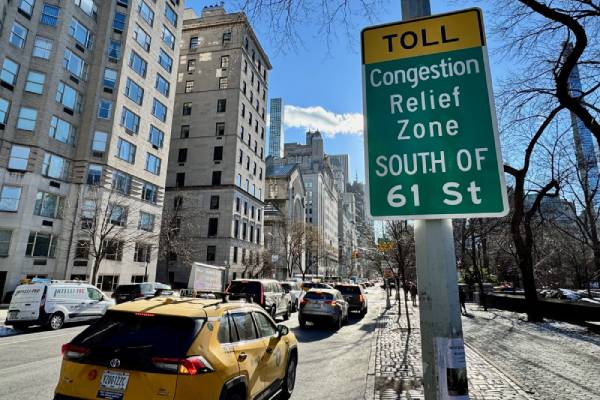
After One Year, NYC Congestion Pricing Is Delivering Measurable Results
Summary
One year after New York City introduced congestion pricing in central Manhattan, city data and independent studies show clear, measurable outcomes: substantially fewer vehicles entering the congestion zone, shorter delays and improved air quality. The scheme — which charges most drivers a daily fee and higher rates for larger trucks — appears to be changing travel behaviour and improving conditions for transit, emergency response and delivery operations.
Key Points
- Approximately 23 million fewer vehicle trips entered Manhattan’s congestion zone in the first year compared with the prior year.
- Traffic delays inside the zone fell by about 25%, with travel speeds improving on many major streets and crossings.
- A Cornell University study found air pollution in the zone fell roughly 22% in the first six months, with benefits spilling into neighbouring areas and suburbs.
- Lighter traffic is helping buses keep to schedules and reducing emergency vehicle delays; delivery fleets are seeing more predictable routing and scheduling.
- The programme remains legally contested — a federal court has delayed a final ruling until 2026 — but results so far suggest the changes are sustained, not transient.
Content Summary
City-released data and independent research indicate a sustained reduction in vehicle volumes and congestion since the scheme began. The daily fee for most cars — and larger charges for trucks depending on size and time — has converted many trips into a direct, budgeted cost for fleets and drivers, encouraging re-planning of routes and timings.
The Cornell study specifically measured air-quality gains in the congestion zone during the programme’s early months and observed a meaningful drop in pollutants. Transport officials report operational benefits for buses and emergency services, while logistics and delivery providers are finding traffic more predictable, which can improve on-time performance and routing efficiency.
Despite these positive metrics, the initiative faces political and legal pushback. A federal court has delayed a final decision, leaving the scheme in place for now but uncertain in the longer term.
Context and Relevance
This matters to anyone working in urban logistics, freight, last-mile delivery or city planning. Fewer vehicles and steadier flows change cost calculations (congestion fees, time-on-road), service-level planning and environmental reporting. For supply-chain managers, the shifts affect routing, scheduling, depot location decisions and cost-per-delivery models — especially for firms operating in or into Manhattan.
On the wider policy and sustainability front, the data provide an early real-world case study of how pricing mechanisms can reduce traffic and emissions while funding transit improvements. The legal uncertainty, however, means planners should model both continued implementation and potential changes.
Why should I read this?
Short version: it’s actually happening, and the numbers matter. If you move goods in or around NYC, this affects costs, timing and route choices — so it’s worth a quick read to see how your operations might need to adapt. We’ve done the legwork: the scheme has cut cars, trimmed delays and even cleaned the air — now plan for what that means for your deliveries and budgets.
Source
Source: https://www.supplychain247.com/article/nyc-congestion-pricing-one-year-results