
Navi Mumbai International Airport Begins Commercial Operations, Ushering in Mumbai’s Multi-Airport Era
Summary
Navi Mumbai International Airport (NMIA), developed and operated by Adani Airports, started commercial flight operations on 25–26 December 2025, creating a second major gateway for the Mumbai Metropolitan Region. The greenfield airport opens in phases: an initial capacity of 20 million passengers per annum with plans to expand to 90 million. NMIA includes dedicated cargo terminals and multimodal connectivity to support both passenger and freight flows.
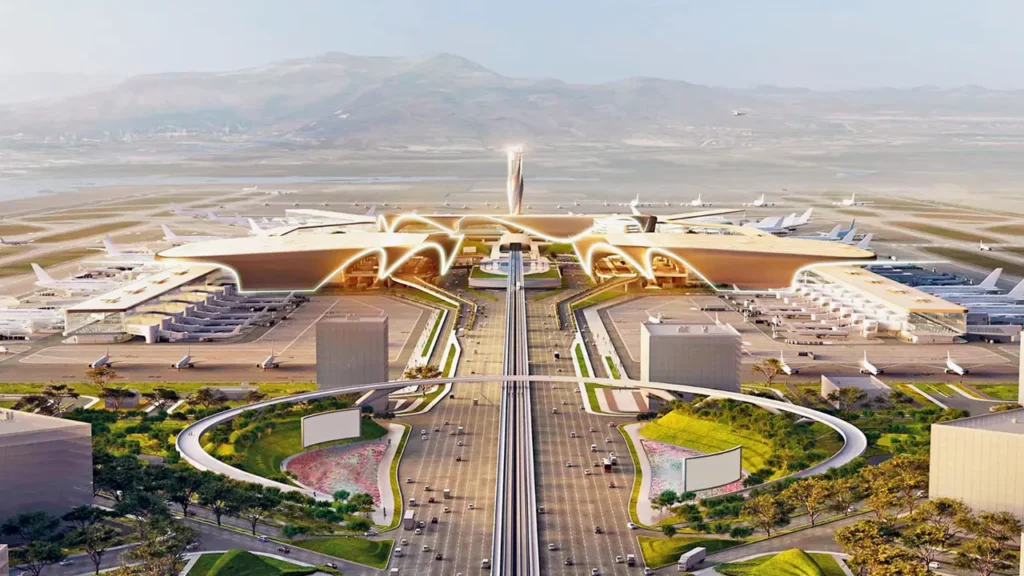
On day one NMIA handled 48 flights and over 4,000 passengers. Domestic carriers operating from the new airport included IndiGo, Air India Express, Akasa Air and Star Air, linking NMIA to multiple domestic destinations. Initial operating hours are 08:00–20:00 with a planned move to round‑the‑clock services from February 2026. The terminal design is inspired by the lotus and incorporates sustainability and modern customer experience features.
Key Points
- NMIA is a greenfield airport developed and operated by Adani Airports to relieve congestion at Chhatrapati Shivaji Maharaj International Airport (CSMIA).
- Initial passenger capacity is 20 million per annum, with phased expansion up to 90 million p.a.; dedicated cargo terminals included.
- First-day operations: 48 flights, 4,000+ passengers; airlines on day one included IndiGo, Air India Express, Akasa Air and Star Air.
- Initial operational window 08:00–20:00 with up to 24 scheduled daily departures to 13 destinations; progressive scale-up to 24×7 from February 2026.
- Airlines have signalled strong commitment: IndiGo to operate 10+ domestic routes from NMIA; Akasa Air plans major growth there (300 domestic and 50 international weekly departures targeted over time).
- Terminal architecture draws on the lotus motif and emphasises sustainability and passenger experience.
- NMIA moves Mumbai towards a multi‑airport model — improving resilience, scalability and cargo capacity for the region.
Context and relevance
The opening of NMIA is a major infrastructure milestone for Mumbai and for Indian aviation. For over a decade CSMIA has coped with capacity pressures; a second full‑service airport unlocks room for growth in passenger and cargo volumes, supports airline network strategies (including dual‑airport operations) and improves operational resilience for the Mumbai Metropolitan Region. The airport’s cargo facilities and multimodal links are particularly relevant to freight and logistics players seeking faster throughput and better connectivity out of western India.
Globally, large metro regions operate multiple airports to distribute traffic and grow capacity (for example London, New York and Tokyo). NMIA places Mumbai on the same trajectory — useful for planners, airlines, ground‑handlers, freight forwarders and investors assessing future capacity and route development opportunities.
Why should I read this?
Quick version — it matters because Mumbai just got a second major airport. If you work in aviation, logistics, route planning, property or supply chains, this changes capacity, timing and where goods and people will move from. It affects airline strategies, cargo handling, and where investment will flow next. Skip the long paper chase; read this if you need to rework schedules, capacity plans or logistics routes for western India.
Author style
Punchy — this is a big, practical story. The launch is not just ceremonial: it materially shifts capacity and the operating map for Mumbai. If you care about aviation networks, supply chains or regional infrastructure, dig into the detail — this one rewrites short‑ and medium‑term planning assumptions.