
Trump AI order introduces ‘unstable regulatory landscape’: analysis
Summary
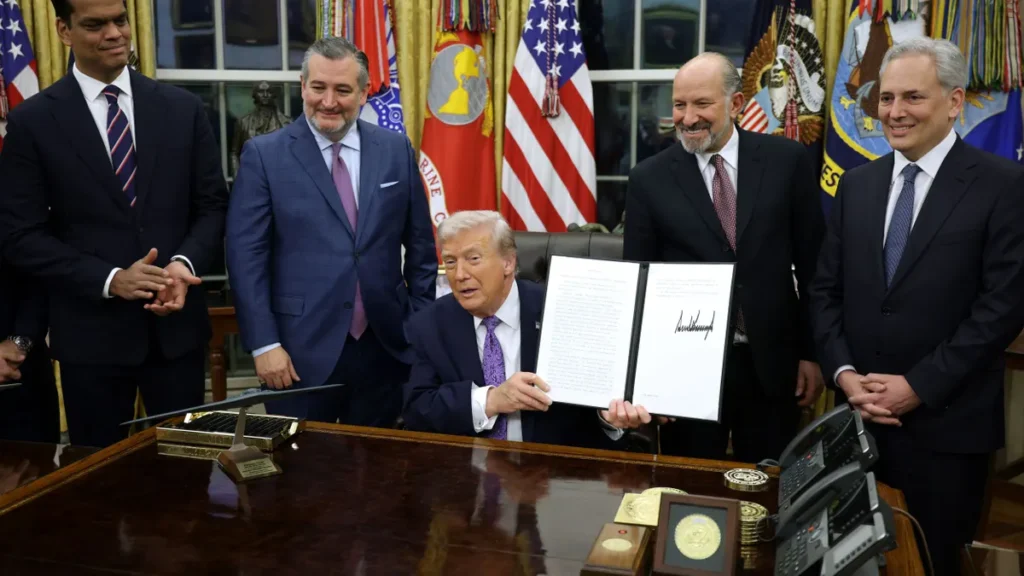
President Donald Trump signed an executive order aiming to limit state-level artificial intelligence laws that the administration deems to overreach or interfere with interstate commerce. The order directs the U.S. Attorney General to form an AI Litigation Task Force within 30 days to challenge state laws, and requires the Commerce Secretary to set funding-eligibility rules within 90 days so states with “onerous” AI statutes could be denied Broadband Equity Access and Deployment Program funds. The White House also asked senior advisers to recommend federal AI legislation that would preempt conflicting state rules.
Legal analysts say the order creates significant constitutional and interpretive questions — including potential conflicts with the anti-commandeering doctrine and whether the president can retroactively alter grant conditions — and warned it will produce an “unstable regulatory landscape” as lawsuits and uncertainty play out. Reactions are split: civil liberties groups and some lawmakers call the order unlawful and dangerous, while business groups like the U.S. Chamber of Commerce praise the move and urge Congress to pass a national framework.
Key Points
- The EO targets state AI laws it views as overreaching, claiming they can impinge on interstate commerce.
- An AI Litigation Task Force led by the Attorney General must be created within 30 days to challenge state statutes.
- Commerce Secretary must set conditions within 90 days that could make states with “onerous” AI laws ineligible for federal broadband funds.
- The White House asked advisors to recommend federal AI legislation intended to preempt conflicting state laws.
- Legal experts warn of constitutional challenges (Tenth Amendment, anti-commandeering) and questions about the EO’s scope and authority.
- Stakeholders are split: civil liberties groups and some lawmakers condemn the order; business groups back a uniform federal approach to avoid a patchwork of state rules.
- Existing state AI laws currently remain enforceable, but enforcement and practical impact are uncertain while litigation and policy decisions progress.
Why should I read this?
Short version: this order could flip the script on how AI is regulated in the US — and fast. If you work with AI, handle compliance, procurement, or public funding, you need to know this could affect which state rules apply to you, whether grant money is at risk, and whether a wave of lawsuits is incoming. It’s the kind of policy shake-up that’ll shape risk and strategy for businesses and HR teams using AI.