
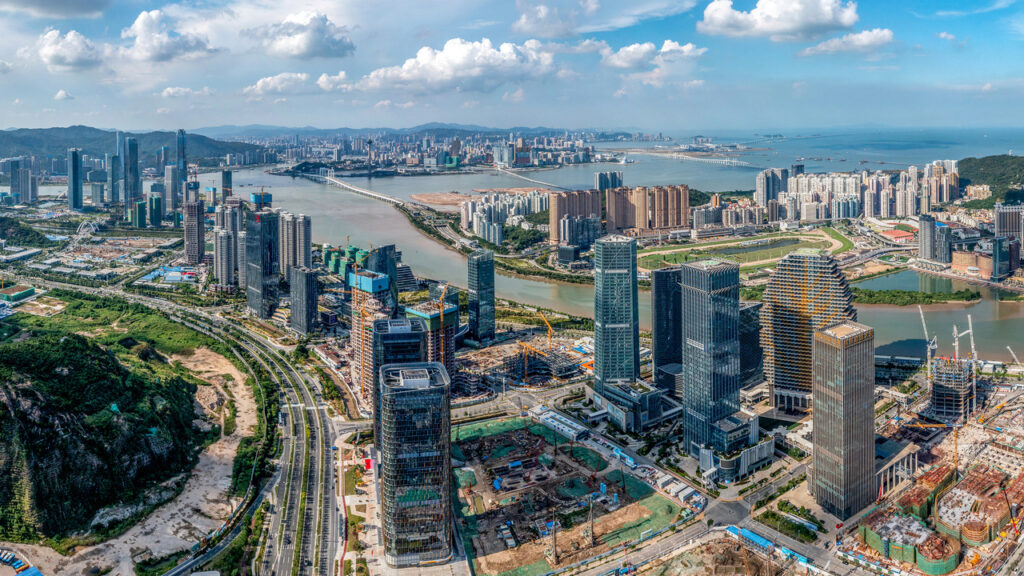
Macau operators to leverage newly proposed Hengqin connectivity to expand revenue sources: analyst
Summary
Morningstar senior equity analyst Jennifer Song says casino operators in Macau are likely to use proposed new cross-border corridors linking Hengqin with Taipa and Coloane to broaden revenue streams and investment reach. The Guangdong–Macau In-Depth Cooperation Zone’s draft spatial plan — currently at the planning and consultation stage — proposes four land crossings and improved rail, road and port links that would better integrate Hengqin and Macau.
Key Points
- The draft plan proposes four new land crossings between Hengqin and Taipa/Coloane (Shizimen Ave, Huitong Fifth Road, Lian’ao Road, Jinjiang Ave).
- Improved connectivity is expected to boost visitor numbers to the Hengqin–Macau area and support Macau’s tourism recovery and long‑term growth.
- Macau operators are likely to invest more in Hengqin to capture customers and grow non‑gaming spending, as Macau’s land area limits expansion.
- Non‑gaming revenue in Macau is currently c.15% of sector income vs Singapore’s 40–50%, so Hengqin offers a diversification opportunity.
- Benefits will probably be strongest among base‑mass tourists (cheaper hotel rates in Hengqin); premium players may still prefer Macau for services and product quality.
- The ultimate impact depends on mainland visa policy and how travel permits evolve once border facilities open.
Content Summary
The Guangdong–Macau Cooperation Zone’s draft blueprint outlines an integrated “cross‑axis belt and three major zones” with coordinated transport links, a proposed Guangzhou–Zhuhai–Macau high‑speed rail link and multiple transit hubs. Song says this infrastructure could unlock tourism potential by making it easier for visitors to move across Hengqin and Macau, which in turn would help casinos expand non‑gaming income and justify new investments in Hengqin facilities.
Analysts expect enhanced mobility to support Macau’s visitor recovery, with official forecasts targeting about 46.43 million arrivals by 2030 (up ~33% from 2024). Morningstar sees October gross gaming revenue hitting a post‑pandemic high and forecasts continued EBITDA recovery in the sector, naming Sands China and Galaxy Entertainment as favoured picks.
Context and Relevance
This article is relevant to investors, operators and policymakers tracking Macau’s post‑pandemic recovery and diversification strategy. The proposed Hengqin connectivity is part of a broader push to relieve Macau’s spatial constraints and boost non‑gaming revenue — a structural shift that could alter where tourists stay, how operators allocate capital and how regional visitor flows develop.
For the gaming industry, the plan signals potential shifts in resort planning, customer acquisition strategies and long‑term site investment. For tourism and infrastructure stakeholders, it underlines the importance of visa policy, transport integration and coordinated urban planning across the Guangdong‑Macau region.
Why should I read this
Short and sharp: if you follow Macau gaming, tourism or regional infrastructure, this is a must‑scan. New Hengqin crossings could reshape where operators spend money and how visitors move — think cheaper rooms in Hengqin, bigger non‑gaming plays, and fresh investment angles for Sands, Galaxy and others. Visa rules are the wildcard, but the opportunity for diversification is real. We’ve skimmed the detail so you don’t have to — but don’t sleep on the implications.