

Executive Summary
Three Key Themes This Quarter
A Quarter That Confirmed What Many Had Suspected
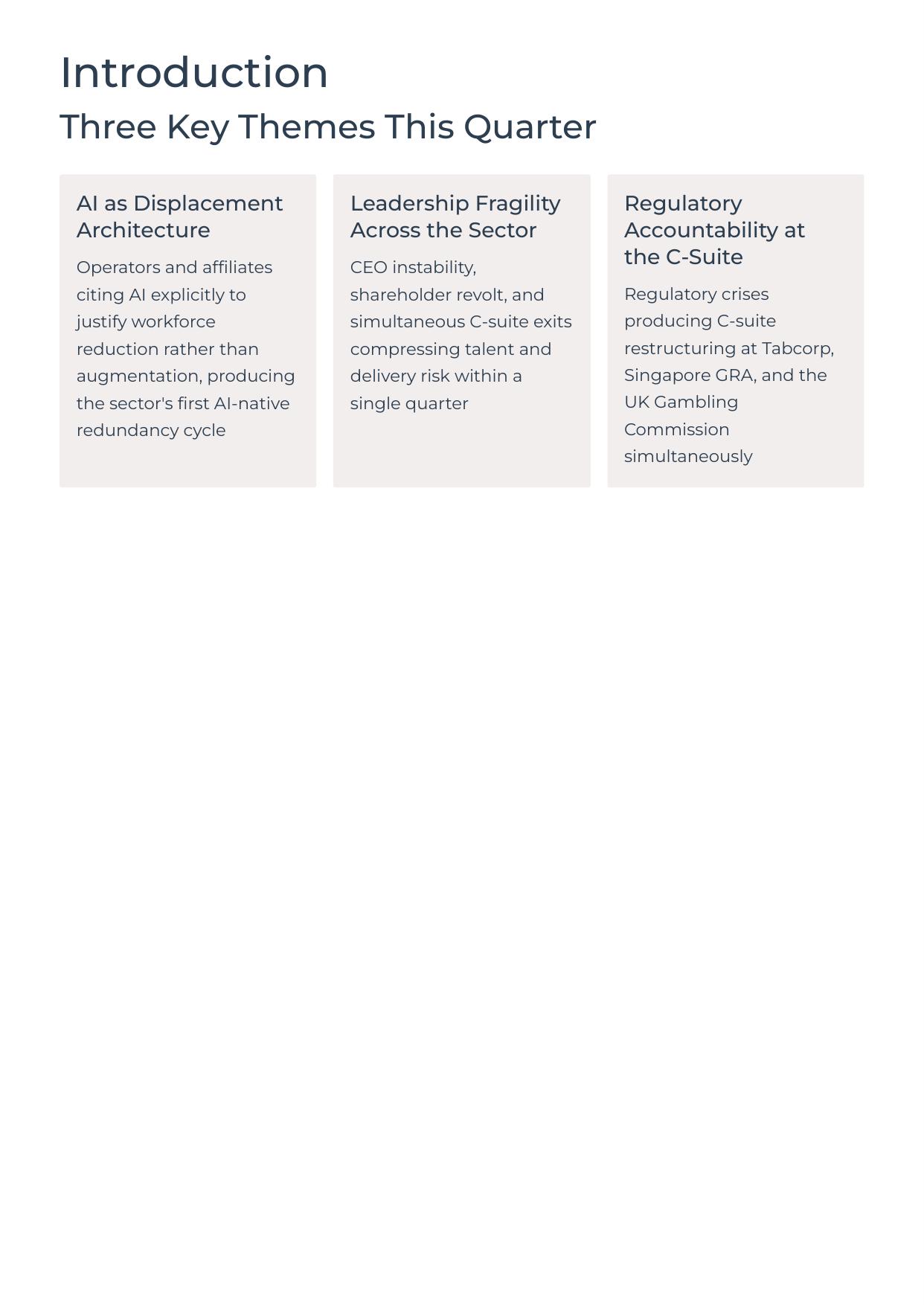
Q2 2026 settled a debate that had been running in gambling HR circles since late 2024: AI adoption in the sector is now a workforce reduction mechanism, not a productivity multiplier. The evidence arrived in bulk. Gambling.com Group cut a quarter of its staff while openly describing an AI-first operating model. FanDuel conducted its third significant layoff round in twelve months. Penn Entertainment eliminated more than 75 roles across its digital division. Bragg Gaming went through two redundancy cycles and a shareholder-forced CEO removal, all within the same six-month period. IGT shed 700 positions from a combined post-merger entity less than a year after the Apollo acquisition closed.
These are not isolated restructurings reflecting individual business failures. The pattern across Q2 is of an industry recalibrating simultaneously, compressing headcount while revenue in several operators remained flat or positive. The break between revenue performance and headcount growth has arrived. It will not reverse quickly.
Alongside the workforce contraction, Q2 delivered an unusual concentration of senior leadership instability. The UK Gambling Commission lost its CEO. FanDuel lost its CEO. Bragg Gaming’s CEO failed a shareholder confidence vote. Rivalry Corp’s entire co-founder leadership group resigned simultaneously. The Betting and Gaming Council launched a new rotating chair model. Singapore completed a dual law enforcement overhaul of its regulatory leadership. Any one of these would be a notable quarter for HR intelligence. Together, they represent a sector whose leadership layer is under structural pressure from multiple directions at once.