
Supreme Court weighs longshot appeal to overturn decision legalising same‑sex marriage nationwide
Summary
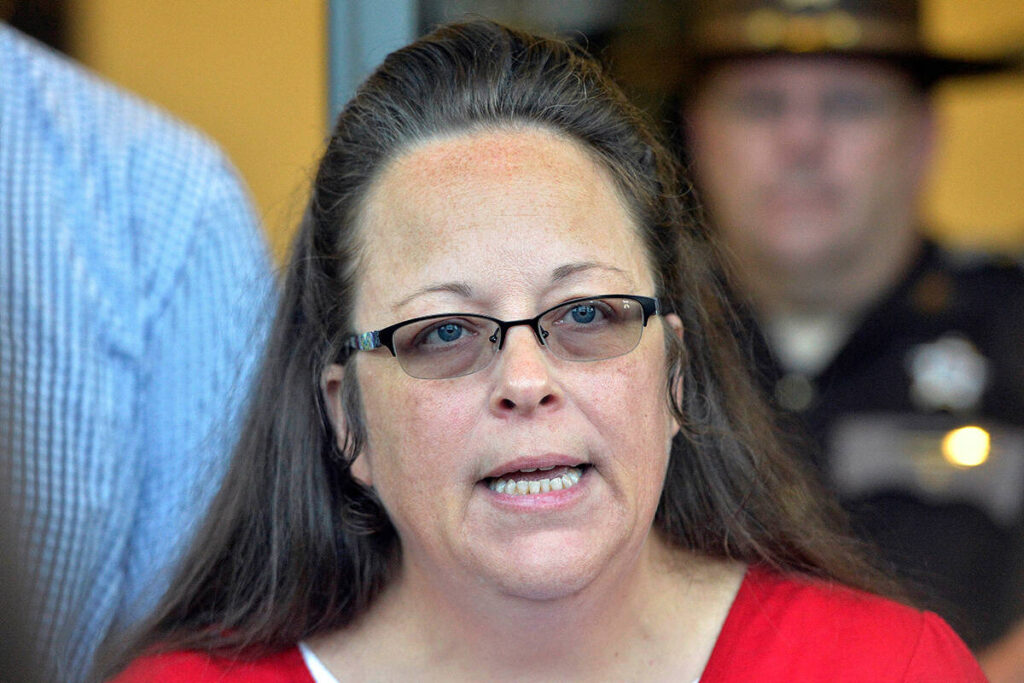
The Supreme Court has a longshot appeal on its conference agenda: Kim Davis, the former Kentucky county clerk who refused to issue marriage licences to same‑sex couples after the court’s 2015 decision in Obergefell v. Hodges, is asking the justices to take up her case. Davis seeks to overturn a lower‑court order requiring her to pay about $360,000 in damages and legal fees to a couple she denied.
Davis’ lawyers lean on comments from Justice Clarence Thomas, who has urged the court to erase the Obergefell ruling. Thomas was joined by Chief Justice John Roberts and Justice Samuel Alito in dissenting in 2015. Justice Amy Coney Barrett — not on the court in 2015 — has said the court sometimes should correct past errors (citing Dobbs in 2022) but has also noted that Obergefell involves reliance interests because people married and started families.
Davis famously defied orders in 2015 and was briefly jailed for contempt; her staff later issued licences and Kentucky changed state forms to remove clerks’ names. The justices could announce whether they will take the case as soon as Monday after their private conference.
Key Points
- The Court is considering a petition from Kim Davis seeking review of damages tied to her refusal to issue marriage licences to same‑sex couples.
- The petition implicitly raises the wider question of whether the 2015 Obergefell decision should remain binding.
- Justice Clarence Thomas has publicly urged erasing Obergefell; Roberts and Alito dissented in 2015.
- Justice Barrett has signalled willingness to overturn precedent in some cases but acknowledged unique reliance interests around marriage.
- Even if the petition is granted, overturning Obergefell would be legally and politically momentous and remains unlikely on its face.
Context and Relevance
This matter touches on constitutional precedent, the doctrine of stare decisis (respecting past rulings), and the practical consequences for millions who married relying on Obergefell. The Court’s post‑2022 trajectory — notably Dobbs, which ended a federal abortion right — makes any case that raises precedent questions especially salient. A decision to hear (and ultimately reverse) Obergefell would reshape family law across the United States; a refusal to take the case would leave the 2015 ruling intact. The case also illuminates how individual acts of defiance (like Davis’) can produce long‑running legal disputes that reach the highest court.
Why should I read this?
Short version: this could be the skinny on whether the Obergefell ruling is still safe. It’s not just legal nitty‑gritty — it’s about whether marriages entered in good faith could face fresh legal uncertainty. If you care about civil rights, family law, or where the Supreme Court is heading, this is worth a quick look.
Author style
Punchy: this is a high‑stakes, headline‑worthy constitutional fight. If you follow Supreme Court decisions or public policy, pay attention — the outcome (or even the decision to hear the case) signals the Court’s appetite for revisiting major precedents.