
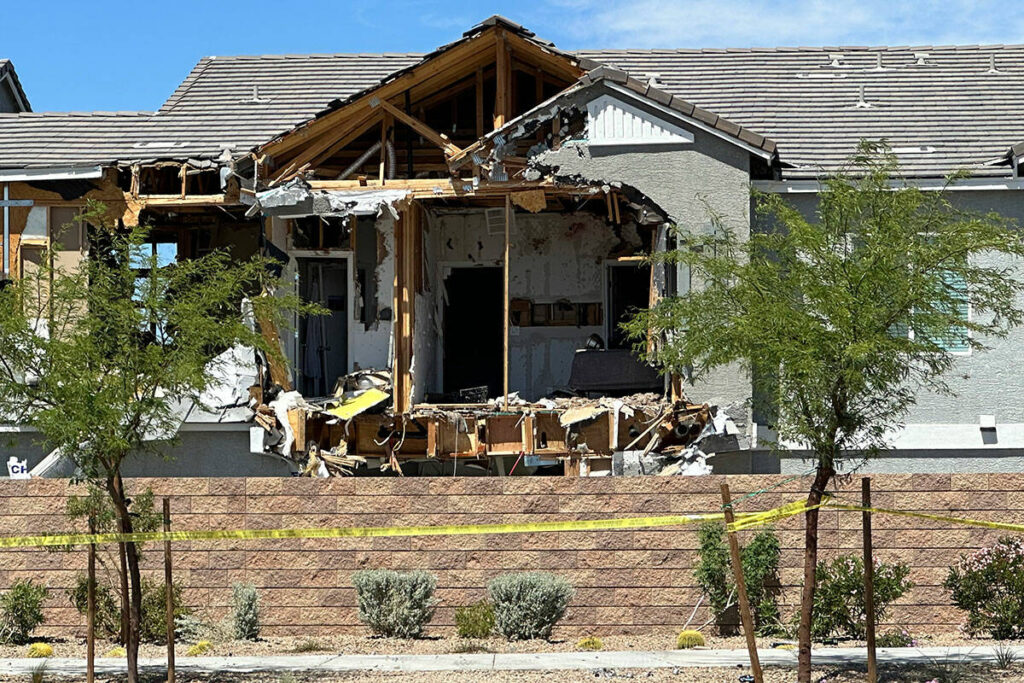
If police raid a home in search of a somebody who doesn’t live there, who pays for repairs?
Summary
Metropolitan Police Department SWAT officers forcibly entered Kim Layson’s southwest Las Vegas home while serving a warrant for a man who had lived at that address before Layson bought the property. The raid shredded doors, damaged drywall and left the family dealing with extensive repairs. Metro initially denied responsibility but later agreed to cover the physical damages after the couple submitted about $25,000 in invoices and after public attention. Layson says the emotional harm is significant; Metro says the incident is under internal review.
Key Points
- SWAT executed a search warrant at Layson’s house for a former resident; Layson was not under investigation.
- Officers caused heavy structural and cosmetic damage — doors, garage and drywall — while entering the property.
- Metro originally denied the claim but later agreed to pay for repair invoices after outreach and review.
- Legal experts say compensation for mistaken raid damage is uncertain — outcomes often hinge on internal processes, insurance exclusions for “acts of government”, media attention or local policymakers.
- A 2021 Nevada law tightened no‑knock warrant standards, requiring judges to be shown a significant and imminent threat before issuing them.
- Nearby examples show cities sometimes settle — Henderson paid roughly $160,000 after a 2024 multiday standoff that damaged neighbouring units.
- Groups like the Institute for Justice argue government should consistently compensate innocent property owners, but say in practice payouts are a “coin toss.”
Context and relevance
This story sits at the intersection of police accountability, homeowner rights and municipal risk management. It highlights gaps in coverage (many insurance policies exclude “acts of government”), the practical effects of warrant‑serving tactics on civilians, and how legal standards (including the 2021 no‑knock law) and public scrutiny shape whether victims are paid. For anyone following criminal justice reform, local government spending, or property law, the piece shows how messy and inconsistent compensation can be.
Why should I read this?
Short version: because this could happen to anyone — and whether you get your doors fixed or stuck paying for it yourself often comes down to luck, paperwork and publicity. If you care about police practices, homeowner protections or how councils handle liability, this saves you the legwork.