
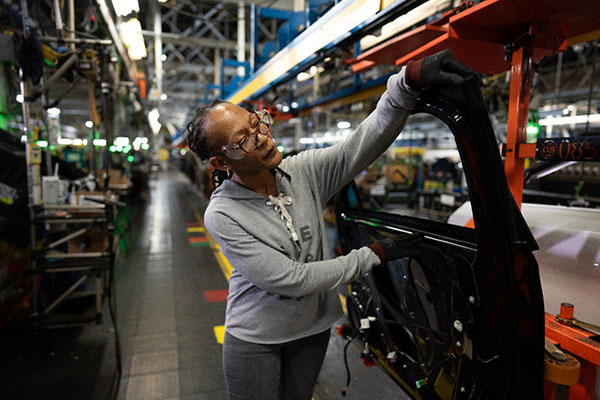
GM to Invest $4 Billion in Michigan, Kansas, and Tennessee Plants
Summary
GM will invest $4 billion over the next two years to expand vehicle production at U.S. plants in Michigan, Kansas and Tennessee, shifting some work from Mexico. The move increases U.S. annual production capacity to more than two million vehicles from about 1.7 million and covers both internal-combustion and electric vehicles.
The funding supports specific line changes: Orion Assembly (Michigan) will build full-size gas SUVs and light-duty pickups in early 2027 while EV production such as the Chevrolet Silverado EV and GMC Sierra EV moves to Factory ZERO; Fairfax Assembly (Kansas City) will make the gas Chevrolet Equinox from mid-2027 and the 2027 Chevrolet Bolt EV by the end of the year; Spring Hill (Tennessee) will begin producing the gas Chevrolet Blazer in 2027 while continuing Cadillac LYRIQ, VISTIQ and XT5 production.
The investment follows an earlier $888 million commitment to Tonawanda for next-generation V-8 engines. GM says the decision responds in part to new U.S. tariffs on imported vehicles and parts, aims to rebalance manufacturing, relieve pressure on Arlington, Texas, and support American jobs.
Key Points
- $4 billion investment to expand U.S. vehicle production over two years, raising capacity to over 2 million vehicles annually.
- Orion Assembly (Michigan) will shift to full-size gas SUVs and pickups in early 2027; Factory ZERO takes on key EV truck production.
- Fairfax (Kansas City) will produce the Chevrolet Equinox from mid-2027 and the 2027 Chevrolet Bolt EV by year-end.
- Spring Hill (Tennessee) will start gas Chevrolet Blazer production in 2027 while continuing Cadillac EV and ICE models.
- Decision follows the $888m Tonawanda investment and comes amid U.S. tariffs on imported vehicles and parts, influencing reshoring choices.
- GM maintains annual capital-spend guidance of $10–12 billion through 2027; the UAW has publicly endorsed the investment as supporting U.S. jobs.
Context and Relevance
This announcement signals how automakers are balancing EV rollouts with sustained consumer demand for SUVs and pickups. For supply-chain, manufacturing and logistics teams it is important because reallocating production affects supplier sourcing, cross-border parts flows and regional employment. Tariff policy and market demand are accelerating reshoring and capacity realignment across the industry.
Author style
Punchy: Big money, big ripple effects. This update reshuffles where GM builds its highest-demand models, shifts significant EV volumes into Detroit, and forces suppliers and transport networks to adapt. If you’re in automotive supply chain, regional planning or supplier management, the details matter — read the specifics.
Why should I read this?
Short version: if you buy, ship or make parts for cars (or care about local jobs), this changes the map. Tariffs and demand swings are pushing work back to the U.S., and GM’s choices will ripple through suppliers, logistics and local economies. Worth a quick skim — and a proper read if you’re directly affected.
Source
Source: https://www.supplychain247.com/article/gm-us-plant-investment-2025-ev-suv-shift